
What's Happening?
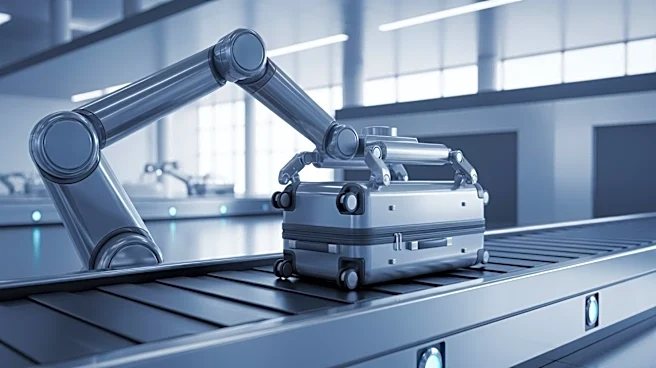
Japan Airlines is set to introduce humanoid robots to assist with baggage handling at Tokyo's Haneda Airport. These robots, manufactured by China's Unitree Robotics, will begin operations in May. The initiative
aims to address labor shortages and reduce the physical burden on human workers. The robots are capable of moving luggage and cargo on the tarmac and are expected to become a permanent part of the workflow by 2027 if the trial is successful. The robots can operate for two to three hours before needing to recharge. This move is part of a broader effort to automate airport operations, although certain tasks, such as safety management, will still require human oversight.
Why It's Important?
The introduction of humanoid robots in airport operations highlights the growing trend of automation in industries facing labor shortages. For Japan, which is experiencing a significant increase in tourism, this technology could alleviate the pressure on human workers and improve efficiency. The use of robots in such roles could set a precedent for other airports worldwide, potentially transforming how baggage handling and other labor-intensive tasks are managed. This development also underscores the importance of balancing automation with human oversight to ensure safety and reliability in critical operations.
What's Next?
If the trial at Haneda Airport proves successful, Japan Airlines may expand the use of humanoid robots to other airports and tasks, such as cleaning aircraft cabins. The ongoing labor shortages in Japan could accelerate the adoption of such technologies across various sectors. Stakeholders, including labor unions and regulatory bodies, will likely monitor the impact of automation on employment and operational safety. The outcome of this trial could influence future policies and investments in automation technologies within the aviation industry.