
What's Happening?
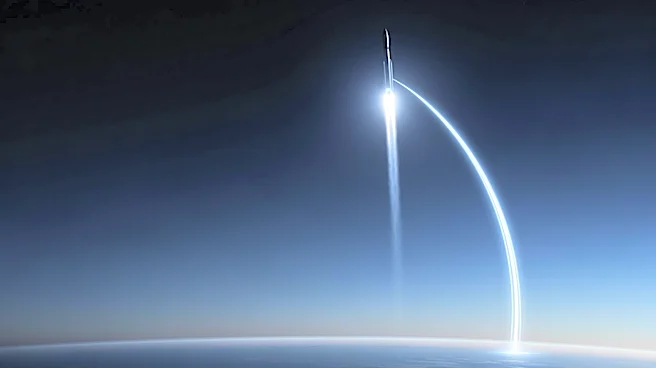
NASA is preparing to launch the fifth mission of the Focusing Optics X-ray Solar Imager (FOXSI-5) from the Poker Flat Research Range in Alaska. This mission, led by Juan Camilo Buitrago-Casas from the University
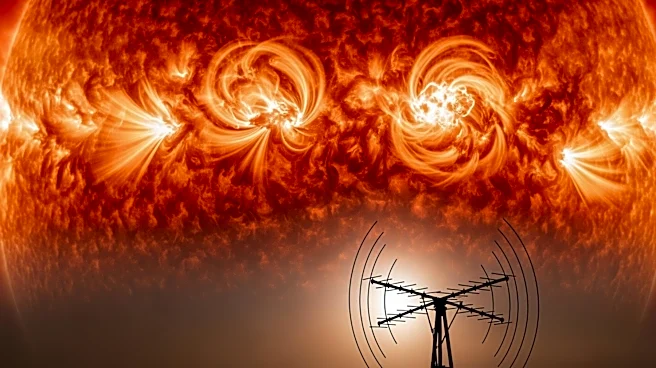
of California, Berkeley, aims to study large solar flares using X-rays. The launch is scheduled to occur between May 1 and May 15, utilizing a NASA Black Brant IX suborbital sounding rocket. The Poker Flat facility, operated by the University of Alaska Fairbanks Geophysical Institute under a NASA contract, provides an ideal location for this research. Solar flares, which are powerful bursts of radiation, can affect Earth's magnetic field, creating auroras and potentially disrupting satellites and communications. The FOXSI instrument is designed to capture X-rays emitted by these flares, offering insights into the sun's corona and the dynamics of solar explosions.
Why It's Important?
Understanding solar flares is crucial as they can have significant impacts on Earth's technological infrastructure. By studying these phenomena, scientists aim to mitigate potential damage to satellites and communication systems. The FOXSI-5 mission is particularly timely as it coincides with the solar maximum, a period of heightened solar activity. This research could lead to better predictive models for solar flares, enhancing our ability to protect critical technology. The mission also contributes to the broader understanding of solar physics, offering insights into the sun's magnetic fields and energy dynamics.
What's Next?
Following the launch, the FOXSI-5 mission will focus on capturing data from solar flares during the solar maximum. The findings could influence future research and technology development aimed at safeguarding satellites and communication networks. The mission's success may also pave the way for subsequent launches and studies, furthering our understanding of solar phenomena. Stakeholders in the aerospace and telecommunications industries will likely monitor the outcomes closely, as the data could inform strategies to protect assets from solar-induced disruptions.
Beyond the Headlines
The FOXSI-5 mission highlights the intersection of space exploration and technological resilience. As our reliance on satellite technology grows, understanding and mitigating space weather risks becomes increasingly important. This mission underscores the need for continued investment in space research to safeguard technological infrastructure. Additionally, the collaboration between academic institutions and NASA exemplifies the importance of partnerships in advancing scientific knowledge.