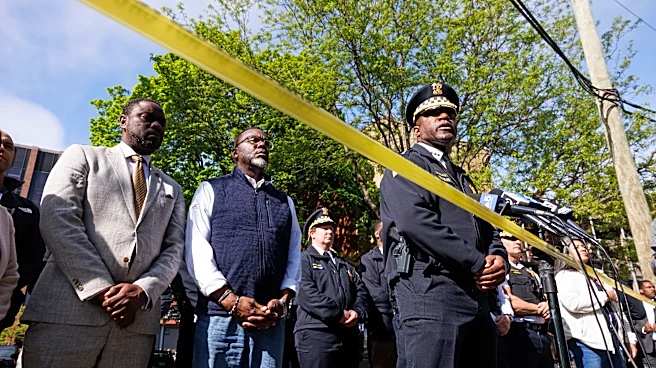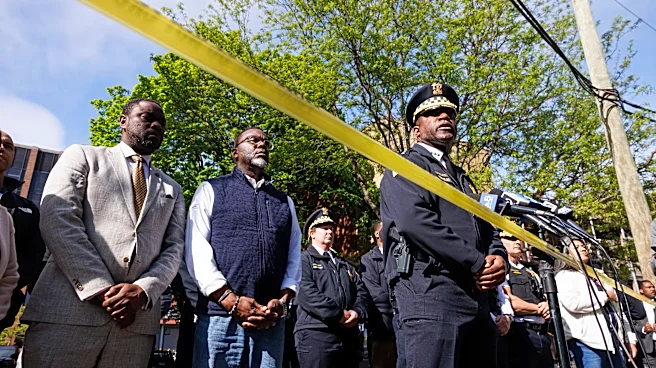








What's Happening?
Federal law enforcement in Chicago is shifting its strategy to combat urban violence by focusing on rapid-response initiatives. This approach emphasizes immediate interventions to prevent shootings and other violent crimes, rather than relying solely
on long-term investigations and prosecutions. The strategy involves collaboration among federal, state, and local law enforcement agencies, including the FBI, DEA, and ATF. The goal is to disrupt cycles of violence quickly and effectively, using real-time data and targeted actions. This shift is seen as a necessary adaptation to the fast-paced nature of modern crime, where incidents can escalate rapidly.
Why It's Important?
The new strategy represents a significant shift in how federal law enforcement addresses urban violence, particularly in cities like Chicago that have struggled with high crime rates. By focusing on rapid interventions, law enforcement aims to reduce violence more effectively and prevent crimes before they occur. This approach could lead to safer communities and fewer victims, addressing public concerns about safety and law enforcement effectiveness. The success of this strategy could serve as a model for other cities facing similar challenges, potentially influencing national crime prevention policies.
What's Next?
As the new strategy is implemented, law enforcement agencies will monitor its effectiveness in reducing crime rates and improving public safety. The approach may require adjustments based on real-world outcomes and feedback from community stakeholders. Continued collaboration among various law enforcement agencies will be crucial to its success. The strategy's impact on crime rates and community relations will likely be evaluated over the coming months, with potential implications for future policy decisions at both local and national levels.