






What's Happening?
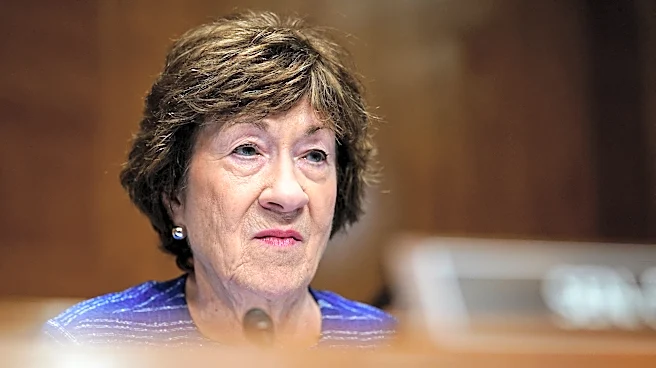
Senator Susan Collins, a five-term Republican from Maine, is encountering a difficult re-election campaign in 2026 against Democratic challenger Troy Jackson. Collins, known for her long tenure and ability to secure federal funding for Maine, is perceived
as vulnerable, largely due to her vote for Brett Kavanaugh's Supreme Court confirmation. This vote has alienated some of her traditional supporters, particularly women who recall the period before Roe v. Wade. Recent polls indicate a tight contest, with Jackson currently holding a three- to four-percentage-point lead. Advocacy groups like Planned Parenthood's advocacy arm are investing over $600,000 in advertisements linking Collins to the erosion of abortion rights, while Reproductive Freedom for All has endorsed Jackson. Voters like Lisa Kushner, 80, who previously supported Collins, are now actively volunteering to unseat her, citing abortion as a primary concern. Other older women voters in Maine, such as Elayne Richard, 72, and Elizabeth Leonard, a retired historian, express deep concern about the long-term implications of abortion restrictions for future generations.
Why It's Important?
This election is critical as it is one of nine midterm races that could determine the control of the U.S. Senate, highlighting the national significance of state-level political contests. The shift in support among older women voters, a demographic Collins has historically relied upon, underscores the profound impact of the Supreme Court's decision to overturn Roe v. Wade on electoral dynamics. Maine, being the state with the oldest median age in the country, makes the sentiments of these voters particularly influential. The campaign's focus on Collins's vote for Brett Kavanaugh and its perceived link to the subsequent overturning of Roe v. Wade demonstrates how judicial appointments can become central issues in senatorial races, reshaping voter loyalty and campaign strategies. The substantial financial investment by abortion rights advocacy groups further illustrates the high stakes and the national effort to influence this particular Senate seat, reflecting a broader political battle over reproductive rights across the country.
What's Next?
As the 2026 election approaches, the race between Senator Collins and Troy Jackson is expected to intensify, with abortion rights remaining a central theme. Jackson's campaign spokesperson, Maggie Amjad, has stated that Jackson will continue to emphasize Collins's vote for Kavanaugh and its perceived damage to abortion rights. Collins will likely continue to leverage her reputation as an independent voice and her focus on Maine-specific issues to counter these attacks. The significant spending by advocacy groups like Planned Parenthood suggests a sustained effort to sway public opinion. The outcome will depend on whether Collins can regain the trust of voters, particularly older women, who feel betrayed by her stance on judicial appointments and their subsequent impact on reproductive rights. The race will serve as a key indicator of the ongoing political fallout from the overturning of Roe v. Wade and its influence on future elections, especially in states with older demographics.
Beyond the Headlines
The evolving political landscape in Maine, particularly the challenge faced by Senator Collins, reveals deeper societal shifts regarding reproductive rights and political accountability. The personal testimonies of women like Lisa Kushner, who experienced life before Roe v. Wade, highlight a generational memory that is now actively influencing political engagement. This suggests that for many, the issue of abortion is not merely a policy debate but a deeply personal and historical concern that transcends typical political affiliations. The emphasis on Collins's vote for Kavanaugh, despite her past pro-choice stance, underscores a growing demand for consistency and perceived integrity from elected officials on critical social issues. This election could set a precedent for how voters hold politicians accountable for their roles in judicial appointments, especially when those appointments lead to significant changes in established legal rights. It also reflects a broader trend where national issues, particularly those with strong moral or ethical dimensions, increasingly dominate local and state-level elections.