




What's Happening?
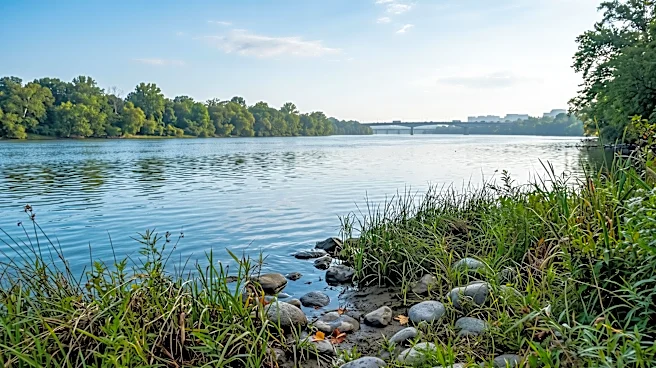
The Anacostia Watershed Society's latest State of the River Report Card indicates a significant improvement in the Anacostia River's water quality, achieving its best grade in the report's history: a C-minus. This marks a considerable advancement from
the failing grade the river received when the first report card was issued in 2014. Christopher E. Williams, president and CEO of the Anacostia Watershed Society, highlighted this as a cause for celebration, noting that the river is no longer failing and is steadily moving up the grade scale. The improvement is attributed to sustained efforts over decades by volunteers, community members, and local agencies. While the river is not yet safe for swimming, Williams suggests it could be in a few years.
Why It's Important?
The improved water quality of the Anacostia River signifies a major environmental success story and demonstrates the effectiveness of long-term conservation efforts. This progress has significant implications for public health, local ecosystems, and community engagement. A cleaner river means a healthier habitat for fish and wildlife, contributing to biodiversity and ecological balance. For residents, the prospect of a swimmable and fishable river offers enhanced recreational opportunities and a stronger connection to their natural environment. This achievement can also serve as a model for other urban waterways facing similar pollution challenges, showcasing the impact of dedicated monitoring, community involvement, and targeted interventions. The continued focus on reducing fecal bacteria and increasing dissolved oxygen levels is crucial for achieving the ultimate goal of a fully healthy river ecosystem, which would benefit both human and environmental well-being in the Washington D.C. area.
What's Next?
The Anacostia Watershed Society will release its full State of the River Report Card to the public on Tuesday, providing detailed insights into the river's health indicators. While the C-minus grade is a positive step, efforts will continue to address remaining challenges, particularly concerning fecal bacteria levels, which are identified as the primary obstacle to making the river swimmable. Improving dissolved oxygen levels is also a priority to support fish and wildlife. The society, along with volunteers, community members, and local agencies, will likely continue their sustained work, focusing on these specific areas. The long-term goal remains a river that is both fishable and swimmable, and the current progress suggests that this vision is becoming increasingly attainable within the next few years. Continued monitoring and public awareness campaigns will be essential to maintain momentum and secure further improvements.
Beyond the Headlines
The journey of the Anacostia River from a failing grade to a C-minus reflects a broader shift in environmental consciousness and the power of collective action. This success story is not just about water quality; it's about community resilience, scientific monitoring, and policy implementation. The comparison of the river to a 'troubled student' highlights the incremental nature of environmental recovery and the need for persistent effort. The ongoing challenge of fecal bacteria points to issues of urban infrastructure, stormwater management, and public education regarding pollution sources. Achieving a truly swimmable river would not only transform the ecological landscape but also foster a deeper sense of civic pride and environmental stewardship among residents. This progress could also stimulate economic development along the riverfront, creating new opportunities for recreation and tourism, while reinforcing the importance of investing in environmental restoration for long-term societal benefits.