

What's Happening?
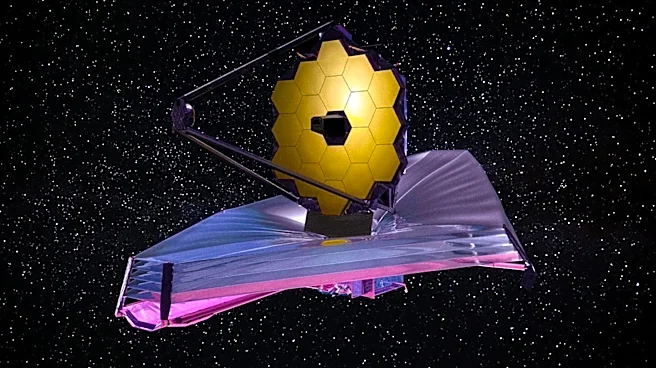
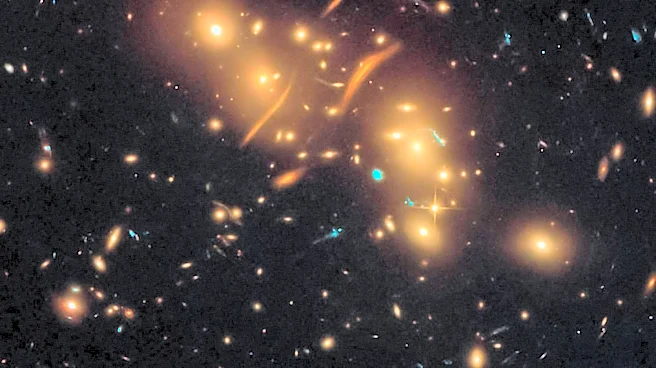
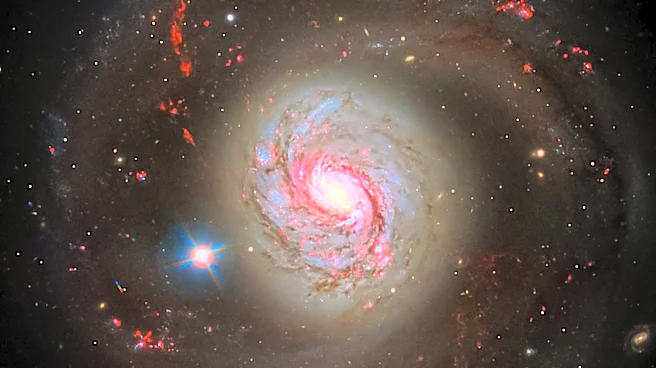
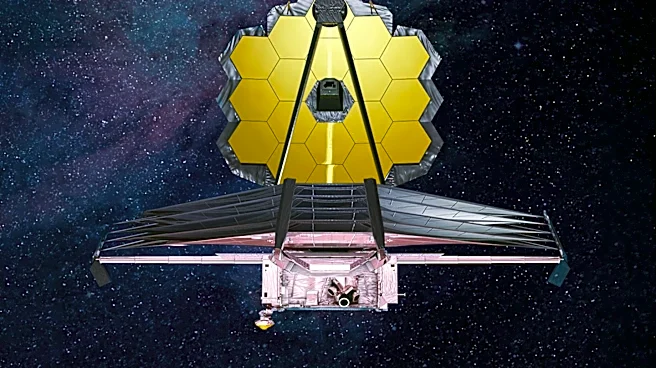
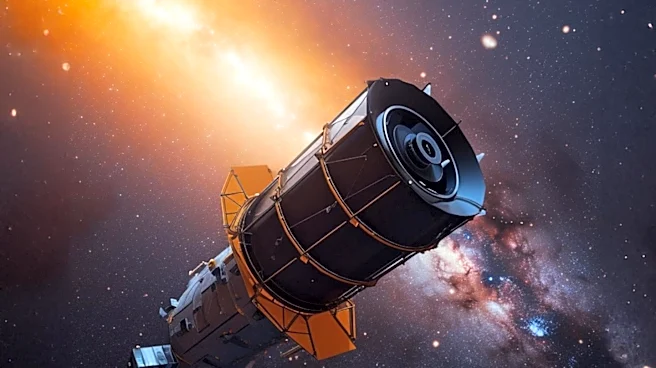
The James Webb Space Telescope (JWST) is transforming astronomers' understanding of the early universe with its observations of 'little red dots' and other cosmic phenomena. These dots, which appeared around 650 million years after the Big Bang, are among
several mysteries uncovered by JWST, including unexpectedly large black holes and ancient galaxies that challenge existing astrophysical theories. Researchers are exploring new theories to explain these findings, such as the possibility of 'black hole stars'—black holes surrounded by dense gas clouds that emit light. The telescope's discoveries are prompting scientists to reconsider their understanding of the universe's early development.
Why It's Important?
The findings from the JWST are significant as they challenge long-held theories about the formation and evolution of the universe. The discovery of massive black holes and ancient galaxies that defy current models could lead to new insights into the processes that shaped the cosmos. This has implications for our understanding of fundamental astrophysical concepts and could influence future research directions in cosmology and astrophysics. The JWST's ability to observe the universe's earliest stages provides a unique opportunity to refine our knowledge of cosmic history and the forces that govern it.