







What's Happening?
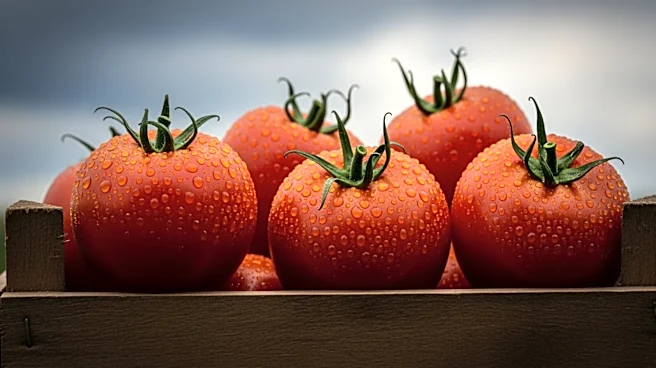
The price of tomatoes in the United States has surged due to adverse weather conditions in key growing regions. A freeze in Florida and drought conditions in Mexico have significantly reduced tomato supplies, leading to a 40% price increase between January
and April, the largest three-month rise since 2006. Although prices have slightly decreased, they remain over 30% higher than the previous year. The U.S. relies heavily on Mexican imports for its tomato supply, with 90% of imports coming from Mexico. However, drought and unseasonal rains have affected production in Mexico, while Florida experienced one of the most damaging freeze events in its agricultural history, resulting in substantial losses. These weather events have led to the highest wholesale prices for Roma and mature green tomatoes in 25 years.
Why It's Important?
The increase in tomato prices is a significant concern for U.S. consumers, as it adds to the broader issue of rising food costs amid ongoing inflation. The situation highlights the vulnerability of agricultural supply chains to climate-related disruptions, which are expected to become more frequent with global warming. The price hikes in tomatoes, a staple in many American diets, reflect a broader trend of food-price shocks that could persist, affecting household budgets and contributing to inflationary pressures. The reliance on imports for essential food items like tomatoes underscores the need for diversified supply sources and improved resilience against climate impacts.
What's Next?
As the U.S. enters the summer months, prices are expected to remain elevated, with no significant relief anticipated until later in the year. The arrival of tomatoes from California and other U.S. regions may help stabilize prices, but they are unlikely to return to 2025 levels soon. Stakeholders, including farmers and policymakers, may need to explore strategies to mitigate the impact of climate change on agriculture, such as investing in more resilient crop varieties and improving water management practices. Consumers may also need to adjust their purchasing habits, seeking alternative produce options or accepting higher costs for tomatoes.