




What's Happening?
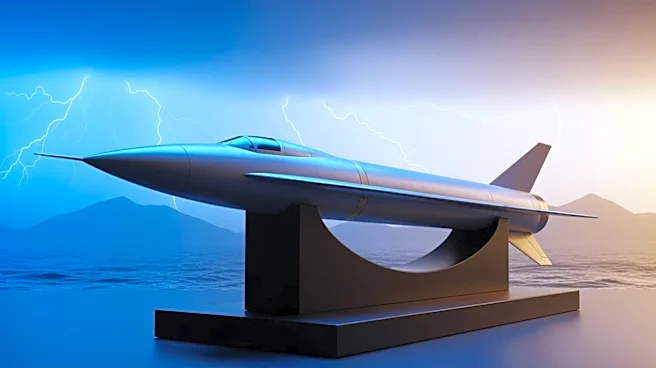
Vietnam is set to become the second foreign buyer of India's BrahMos cruise missile, a move that highlights ongoing security concerns in Asia regarding China's military expansion. The deal, confirmed by Indian Defense Secretary Rajesh Kumar Singh, was
announced during the Shangri-La Dialogue security summit in Singapore. This acquisition is part of Vietnam's strategy to diversify its defense partnerships and enhance its military capabilities, particularly in the South China Sea, where it has territorial disputes with China. The BrahMos missile, co-developed by India and Russia, is known for its speed and accuracy, making it a formidable addition to Vietnam's defense arsenal. The Philippines was the first foreign operator of the BrahMos system, receiving its initial components in 2024.
Why It's Important?
The acquisition of the BrahMos missile by Vietnam underscores the persistent security challenges posed by China's military activities in the region. This move is significant as it reflects Vietnam's efforts to balance its economic ties with China against the need for robust defense capabilities. The deal also aligns with India's 'Act East' policy, which aims to strengthen ties with Southeast Asian nations. For Vietnam, the BrahMos missile enhances its ability to defend its maritime interests, particularly in contested areas of the South China Sea. This development could influence regional security dynamics, prompting neighboring countries to reassess their defense strategies.
What's Next?
Following the acquisition, Vietnam is expected to integrate the BrahMos missile into its defense systems, potentially leading to increased military readiness in the region. The deal may also prompt other Southeast Asian countries to seek similar defense partnerships with India or other nations, further altering the regional security landscape. Additionally, China's response to this development will be closely watched, as it could impact diplomatic relations and military postures in the region.
Beyond the Headlines
The BrahMos deal highlights the complex interplay between economic and security considerations in Asia. While Vietnam and China have improved economic relations, the underlying security tensions remain a significant factor in their bilateral ties. This acquisition also reflects a broader trend of countries in the region seeking to enhance their military capabilities in response to China's growing influence. The deal could lead to increased defense collaboration between India and Vietnam, potentially extending to other areas such as joint military exercises and technology transfers.