
What's Happening?
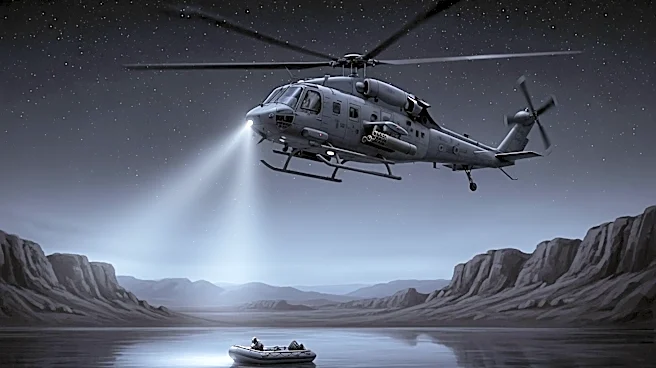
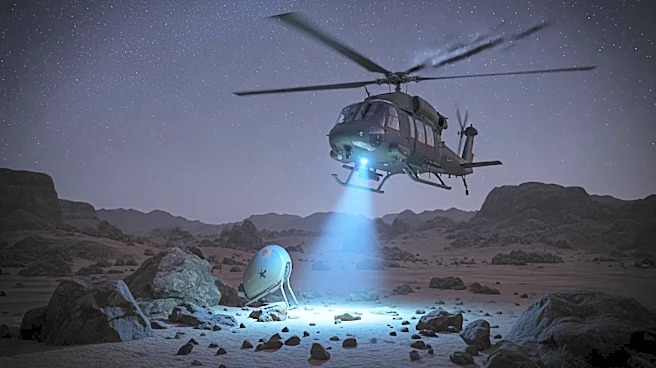
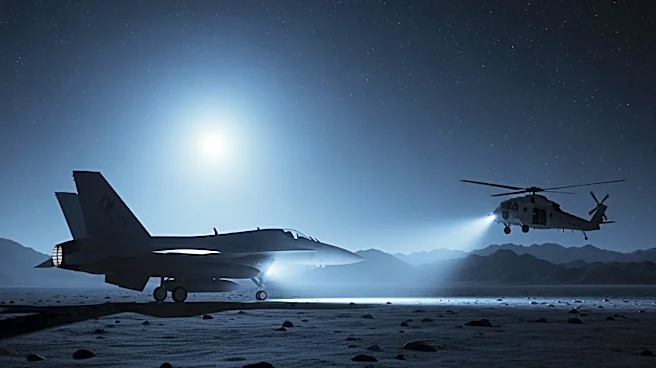
U.S. forces successfully conducted a complex rescue operation to retrieve a downed and injured U.S. Air Force airman inside Iran. The operation, which lasted over two days, involved dozens of aircraft and was announced by President Trump on April 5. The rescue mission
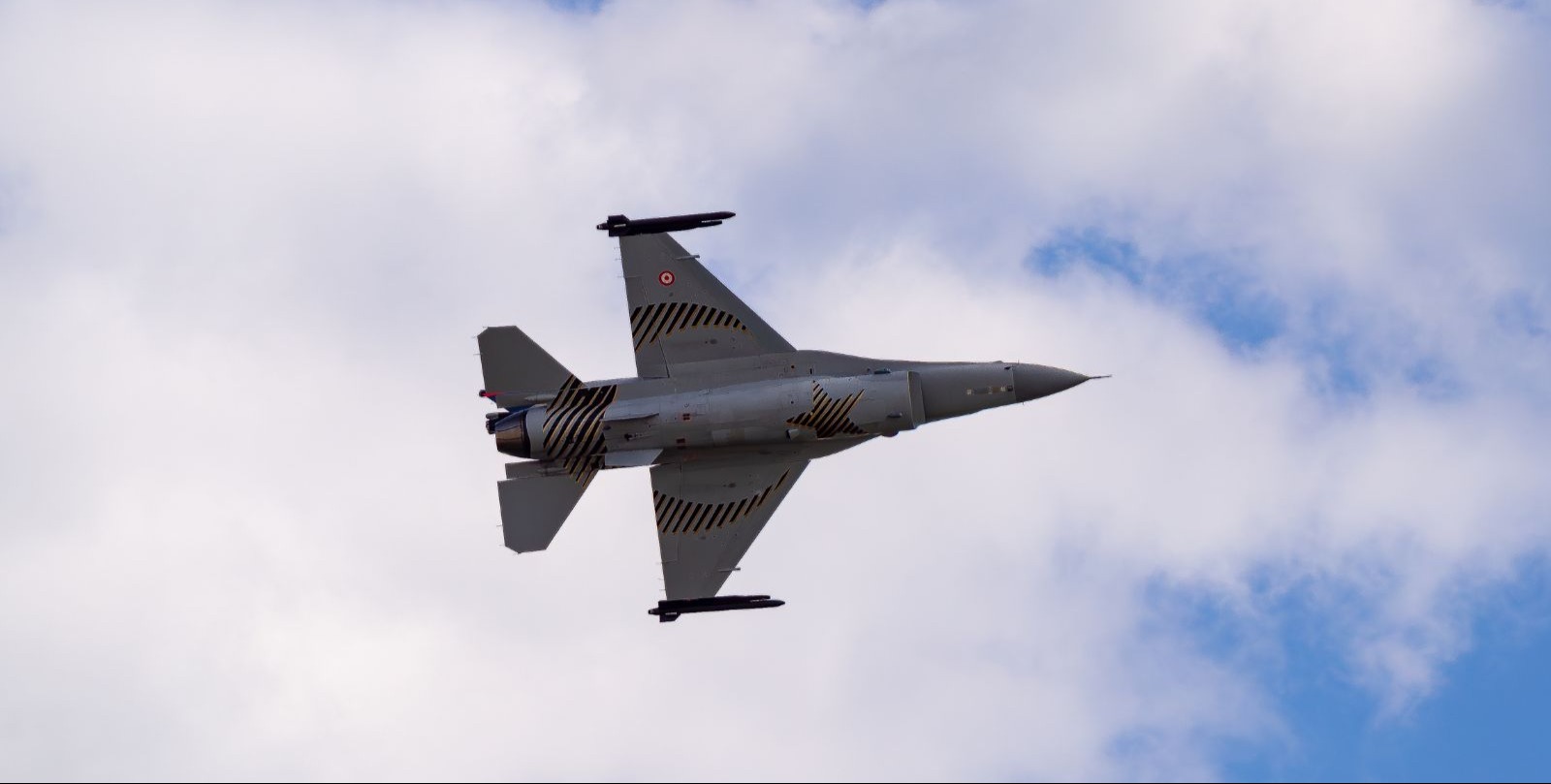
followed the retrieval of the pilot of the downed Boeing F-15E Strike Eagle from a remote area in Iran. Despite the successful rescue, the operation incurred losses, including the destruction of multiple aircraft such as Lockheed Martin C-130s and Boeing H-6 attack helicopters. These aircraft were reportedly destroyed at the forward arming and refueling point. President Trump highlighted the operation's success in achieving air dominance without any American casualties. The mission underscores ongoing military tensions, with the Iranian military retaining effective surface-to-air missile capabilities, as evidenced by the downing of several U.S. aircraft.
Why It's Important?
The successful rescue operation demonstrates the U.S. military's capability to conduct complex missions in hostile environments, reinforcing its strategic presence in the Middle East. The operation's success without American casualties is a significant achievement, potentially boosting morale and confidence in U.S. military operations. However, the destruction of aircraft during the mission highlights the risks involved and the ongoing threat posed by Iranian military capabilities. The incident may escalate tensions between the U.S. and Iran, especially with President Trump's promise of large-scale attacks on Iran's infrastructure if the Strait of Hormuz is not opened to international shipping. This situation could impact global oil markets and international relations, as the Strait is a critical passage for oil transportation.
What's Next?
President Trump has announced an Oval Office press conference on April 6 to provide more details about the rescue mission. Additionally, he has indicated potential large-scale attacks on Iran's infrastructure on April 7 if Tehran does not comply with demands to open the Strait of Hormuz. This could lead to increased military activity in the region and further strain U.S.-Iran relations. The international community may respond with diplomatic efforts to de-escalate tensions and ensure the security of global shipping routes.
Beyond the Headlines
The rescue mission is reminiscent of the failed Operation Eagle Claw in 1980, which led to significant changes in U.S. military operations, including the creation of the Joint Special Operations Command. The current mission may prompt further evaluations of military strategies and technologies, such as the use of Bell Boeing V-22 tiltrotors, to enhance operational capabilities in hostile environments. The situation also raises ethical considerations regarding military interventions and the potential consequences for regional stability.