


What's Happening?
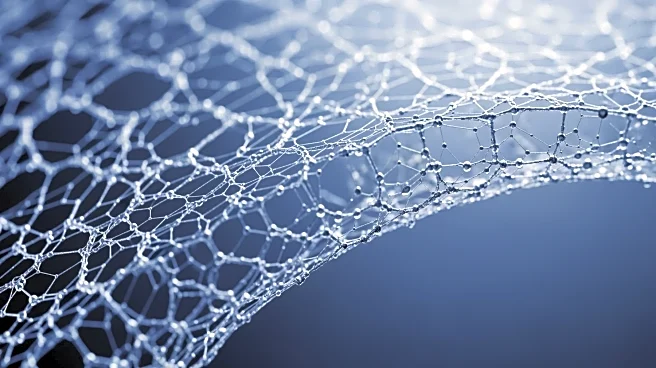
A recent study has highlighted the unique silk structure of the Australian net-casting spider, which has inspired advancements in material science. The spider produces a woolly-looking silk through an intricate weaving process using a cribellum organ.
This organ is dotted with thousands of tiny holes from which the spider pulls individual silk fibers, each with a nano-scale thickness. These fibers together form a strong and elastic silk, which is crucial for the spider's hunting technique. The silk's elasticity and strength allow the spider to effectively trap prey by expanding and retracting its web. This biological inspiration has led to the development of nano-architected materials that mimic these properties, potentially enhancing mechanical performance and tunable properties in various applications.
Why It's Important?
The study of the Australian net-casting spider's silk has significant implications for material science, particularly in the development of new materials with enhanced mechanical properties. By mimicking the spider's silk structure, researchers can create materials that are both strong and elastic, which could be beneficial in various industries, including aerospace, construction, and textiles. The ability to engineer materials with specific properties could lead to innovations in product design and manufacturing, offering more durable and adaptable solutions. This advancement underscores the importance of biomimicry in scientific research, where natural processes inspire technological innovations.