





What's Happening?
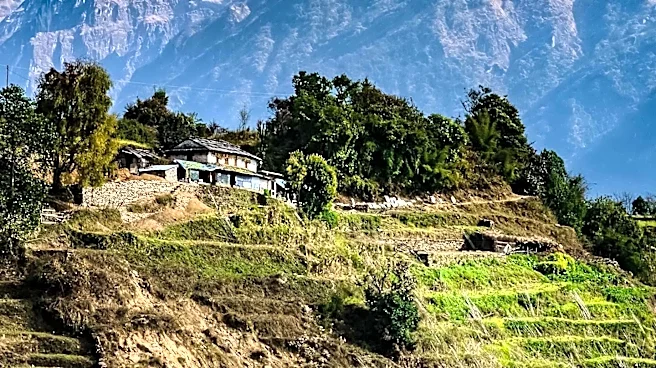
In Sangurigadhi Rural Municipality, Dhankuta, Nepal, several villages are facing a significant threat from landslides. Dhadhuwa village, home to 27 families, is particularly at risk, with landslides occurring on both sides of the settlement. An old landslide on the eastern
side began in 1999, displacing seven families, while a new landslide on the western side started in 2018. The steep terrain and streams exacerbate the situation, putting the entire settlement at risk. Majhuwa village in Ward No. 6 is experiencing similar issues, with landslides surrounding the settlement. The municipality has identified over two dozen landslide-prone locations, affecting many families. Efforts to mitigate the risk include relocating vulnerable families, planting trees, and constructing retaining walls.
Why It's Important?
The landslide risk in Sangurigadhi highlights the broader challenges faced by communities in mountainous regions, where geological instability and unplanned development can lead to significant safety hazards. The displacement of families and potential damage to infrastructure, such as roads, underscore the urgent need for effective disaster management and planning. The situation also reflects the impact of environmental factors and human activities on vulnerable regions, necessitating coordinated efforts to enhance resilience and safety for affected populations.
What's Next?
The local government in Sangurigadhi is actively working to address the landslide threat by relocating families from high-risk areas and implementing preventive measures. Geologists have been brought in to study the affected areas, and safety measures are being put in place. The municipality is also focusing on long-term solutions, such as improving infrastructure planning and increasing community awareness about landslide risks. Continued monitoring and collaboration with experts will be crucial in mitigating future risks and ensuring the safety of residents.
Beyond the Headlines
The situation in Sangurigadhi serves as a reminder of the complex interplay between natural and human-induced factors in disaster-prone areas. The increasing frequency and intensity of landslides may be linked to climate change, highlighting the need for sustainable environmental practices. Additionally, the challenges faced by these communities underscore the importance of integrating scientific research and local knowledge in disaster risk reduction strategies. The efforts in Sangurigadhi could serve as a model for other regions facing similar threats.