



What's Happening?
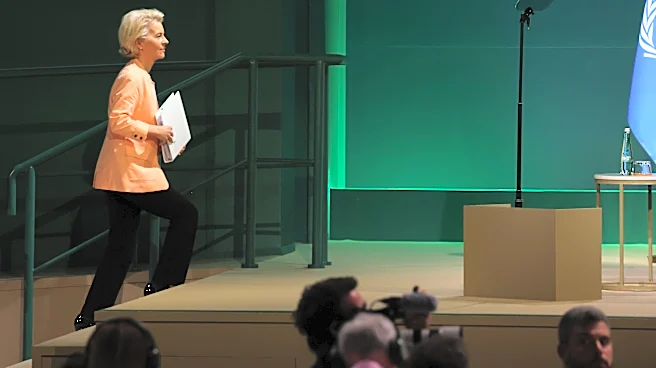
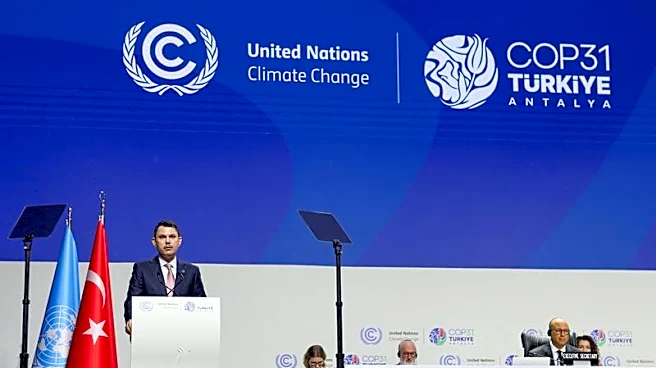
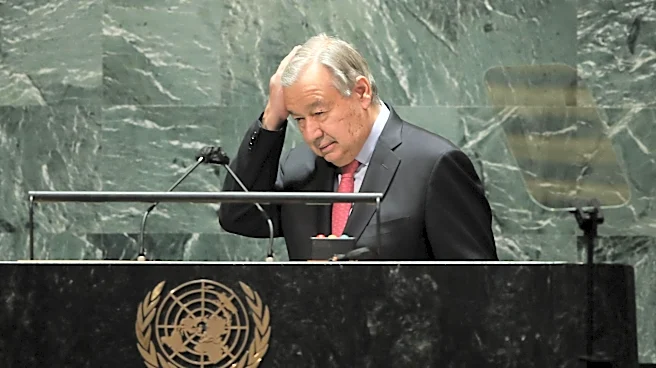
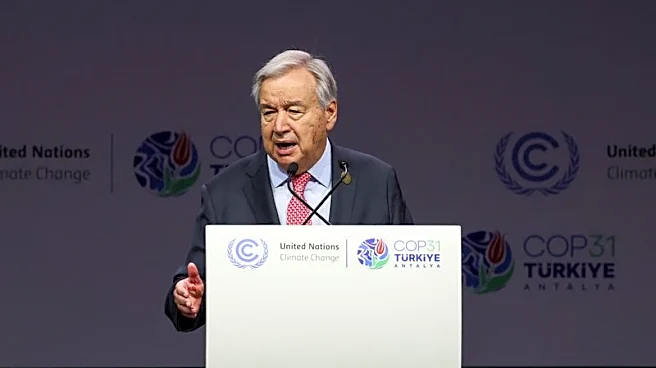
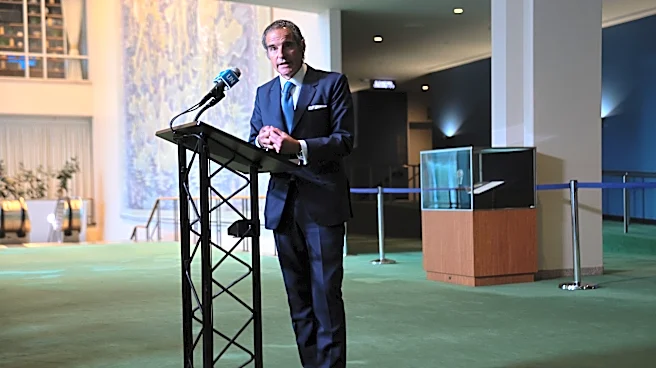
UN Secretary-General António Guterres has emphasized the critical need for escalated action on early warning systems, stating that 'no one should lose their life simply because a warning came too late – or never came at all.' Speaking at a high-level
event during the COP31 climate conference, Guterres highlighted that while 136 countries now have multi-hazard early warning systems, significant gaps remain, particularly in least developed countries and small island states. A new report from the UN Office for Disaster Risk Reduction (UNDRR) and the World Meteorological Organization (WMO) indicates that countries with comprehensive systems experience disaster-related mortality six times lower than those with limited ones. Guterres outlined three priorities: making early warnings a permanent public service, closing financing and capacity gaps, and moving from fragmented projects to coordinated, long-term support for country-led plans.
Why It's Important?
The call for enhanced early warning systems is profoundly important for the U.S., which faces increasing climate-related disasters such as hurricanes, wildfires, and floods. Effective early warning systems can significantly reduce loss of life and economic damage, protecting communities and critical infrastructure. The U.S. National Weather Service and other agencies play a vital role in this, and the global push for better systems can inform and strengthen domestic efforts. Investing in these systems aligns with U.S. national security interests by mitigating humanitarian crises abroad that could require U.S. intervention or aid. Furthermore, the emphasis on sustained funding and coordinated, long-term support resonates with the need for consistent investment in climate resilience within the U.S., ensuring that essential public services like weather forecasting are adequately resourced year after year.
What's Next?
The initiative, 'Early Warnings for All,' is spearheaded by WMO and UNDRR, in collaboration with partners like the International Telecommunications Union and the International Federation of Red Cross and Red Crescent Societies. While 2027 was initially set as the target year for the initiative, all speakers at the high-level event stressed that the effort must continue beyond this milestone. The focus will be on strengthening National Meteorological and Hydrological Services, ensuring they are adequately funded and equipped to provide reliable forecasts. The ongoing challenges include a shortage of technicians in many national weather services and a lack of impact-based forecasts. The global community will continue to work towards closing these gaps, with a particular focus on vulnerable regions, and the progress will be measured in lives and livelihoods saved.
Beyond the Headlines
The discussion around early warning systems extends beyond mere technological implementation to fundamental questions of global equity and shared responsibility. The fact that hazards are evolving faster than protective systems highlights a critical challenge in the age of climate change. The ethical imperative is clear: every individual deserves timely warnings to protect themselves. Legally, this could lead to international agreements or standards for early warning system capabilities and data sharing. Culturally, it fosters a global community approach to disaster preparedness, emphasizing that a forecast in one region can depend on observations from another. The long-term implication is a shift towards a more proactive, globally integrated approach to climate adaptation, where robust early warning systems are recognized as a fundamental human right and a cornerstone of sustainable development.