






What's Happening?
Russia, despite being economically weaker than at the start of the full-scale war, likely possesses enough resources to continue fighting through 2027 and 2028, according to Oleh Ivashchenko, Chief of Ukrainian military intelligence (HUR). Ivashchenko stated
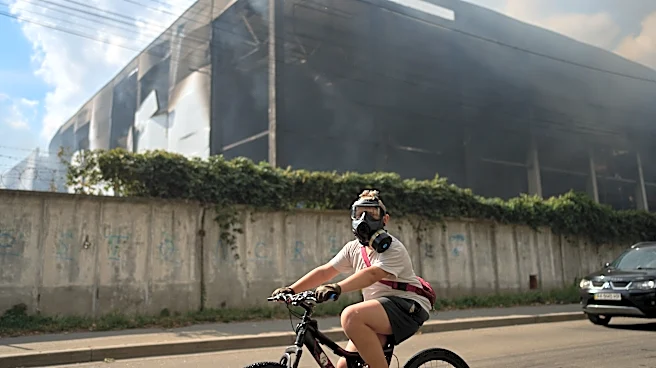
in an interview that Russia's main economic challenges include a shortage of labor resources, a growing federal budget deficit, and a deteriorating banking system. However, he emphasized that these issues have not yet crippled Russia's ability to sustain its military operations. Kyiv's wartime strategy has increasingly focused on long-range drone strikes against Russian refineries, oil depots, factories, and tankers, aiming to undercut the Kremlin's revenues and increase economic pressure. These strikes have reportedly disabled about 40% of Russia's oil-refining infrastructure, leading to fuel shortages and a ban on diesel and gasoline exports. Ukraine has also expanded its targets to include warehouses of online retailers.
Why It's Important?
This assessment from Ukrainian military intelligence provides a crucial, albeit sobering, perspective on the potential duration of the conflict. It indicates that despite significant economic pressure and successful Ukrainian strikes, Russia retains a substantial capacity to continue its war effort for several more years. This understanding is vital for Ukraine and its international partners in planning long-term support strategies, military aid, and diplomatic initiatives. The identified economic vulnerabilities—labor shortages, budget deficit, and banking sector issues—highlight the areas where sustained pressure could be most effective. However, the resilience of Russia's war economy, even under duress, suggests that a quick resolution through economic collapse is unlikely. This necessitates a continued, multi-faceted approach involving military defense, economic sanctions, and diplomatic engagement to counter Russia's prolonged aggression.
What's Next?
Given the assessment that Russia can sustain the war for several more years, Ukraine is expected to continue and intensify its strategy of long-range strikes against Russian economic and military infrastructure. The international community will likely maintain and potentially strengthen sanctions, focusing on restricting Russia's access to foreign components, technologies, and industrial equipment. Efforts to further disrupt Russia's revenue streams, particularly from energy exports, will remain a priority. Ukraine will also continue to seek increased military aid and support from its allies to bolster its defense capabilities and offensive operations. The long-term nature of the conflict implies a sustained commitment from all parties, with ongoing diplomatic efforts likely to run in parallel with military and economic pressures.
Beyond the Headlines
The intelligence assessment that Russia can wage war for several more years has profound implications for global stability and the future of international relations. It suggests that the conflict in Ukraine is not a short-term crisis but a prolonged geopolitical struggle with far-reaching consequences. This extended timeline could lead to a re-evaluation of defense spending and strategic alliances among NATO members and other U.S. allies. The economic strain on Russia, while not immediately decisive, could lead to internal political instability or a shift in its long-term economic orientation. Furthermore, the conflict's duration will continue to impact global supply chains, energy markets, and food security, creating ripple effects that extend far beyond the immediate combat zones. The psychological toll on the populations of both Ukraine and Russia, facing years of conflict, will also be a significant, often overlooked, aspect of this prolonged struggle.