
What's Happening?
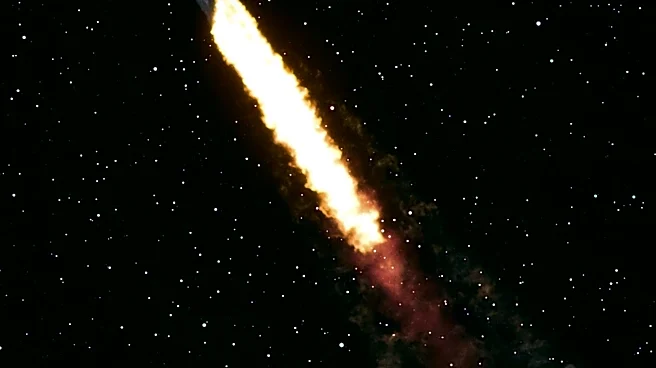
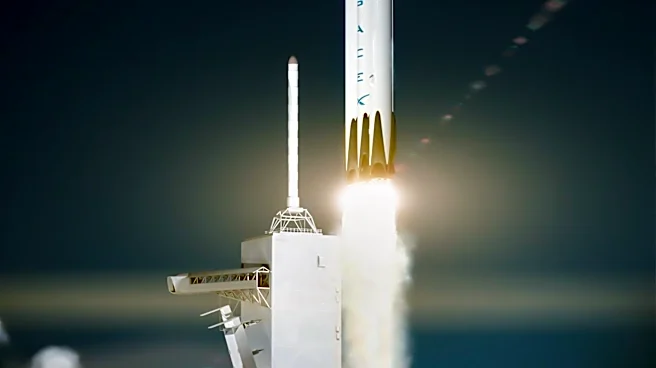
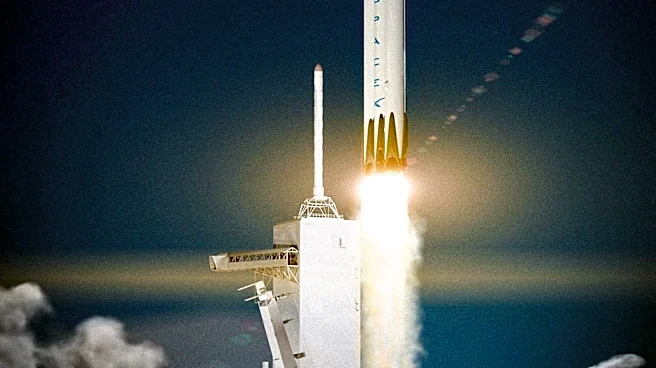
On August 5, 2026, the upper stage of a SpaceX Falcon 9 rocket is set to crash into the moon at approximately 2:35 a.m. EDT. This event will create a crater about 89 feet wide. The rocket, which launched
in January 2025, carried two private robotic lunar landers, Firefly Aerospace's Blue Ghost and Resilience. While Blue Ghost successfully landed, Resilience crashed. The upper stage of the Falcon 9, having used up its fuel, was left in a high-Earth orbit that eventually led to its collision course with the moon. This impact provides a unique opportunity for astronomers and lunar scientists to study the moon's geology and the effects of space debris.
Why It's Important?
The impact of the SpaceX rocket on the moon is significant for several reasons. It offers a rare chance to study the moon's surface and the effects of impacts, which can inform future lunar missions and infrastructure planning. The event also highlights the growing issue of space debris, as the rocket's trajectory was influenced by natural forces after being left in orbit. Understanding these impacts is crucial for the safety and sustainability of future space exploration, particularly as NASA plans to establish a lunar base under the Artemis program.
What's Next?
Following the impact, scientists will analyze data from the event to gain insights into lunar geology and the behavior of space debris. This information will be valuable for future missions and the development of strategies to manage space debris. SpaceX, in collaboration with NASA, is exploring ways to minimize the risk of spent rocket bodies impacting the moon in the future. The findings from this event could influence policies and practices for high-energy missions in the Earth-moon system.