


What's Happening?
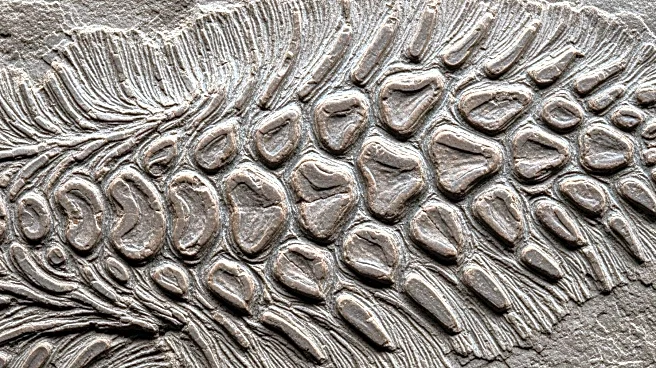
Paleontologists have discovered a new dinosaur species, Haolong dongi, in northeastern China, notable for its unique skin structure featuring hollow spikes. This species, dubbed the 'spiny dragon,' presents a type of skin covering previously unseen in dinosaurs.
The spikes, concentrated around the neck, back, and sides, vary in size and are thought to have served as a defense mechanism against predators. The discovery, based on a single juvenile specimen, raises questions about the spikes' function and whether they were present in adult dinosaurs. The research, published in Nature Ecology & Evolution, suggests these spikes may have deterred predators by making the dinosaur more difficult to consume.
Why It's Important?
The discovery of Haolong dongi adds a new dimension to our understanding of dinosaur evolution and adaptation. The unique skin structure challenges existing theories about dinosaur defense mechanisms and suggests a broader diversity in dinosaur integumentary systems than previously known. This finding could prompt a reevaluation of how dinosaurs adapted to their environments and interacted with predators. For the scientific community, it underscores the potential for new discoveries to reshape our understanding of prehistoric life. Additionally, it highlights the importance of continued paleontological research in uncovering the complexities of ancient ecosystems.