







What's Happening?
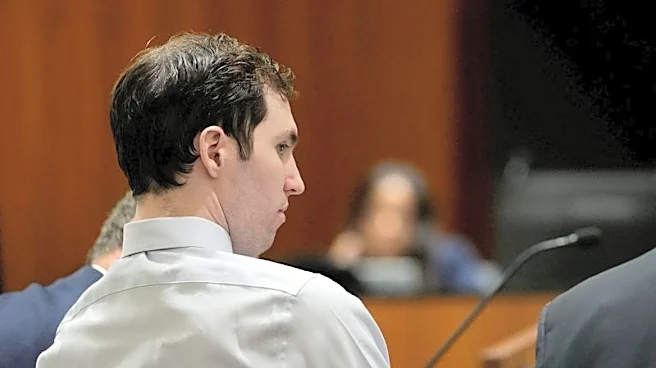
Former New Mexico House Majority Leader Sheryl Williams Stapleton and her co-defendant, Joseph Johnson, were found guilty on all federal counts by a jury in Albuquerque on Friday. The verdict followed a trial that detailed an elaborate eight-year scheme
to illicitly obtain state and federal education funding. Stapleton, 69, and Johnson, 74, were convicted of multiple charges, including bribery, mail fraud, money laundering, and conspiracy to commit money laundering. Additionally, Stapleton faced three counts of fraud and false statements for failing to declare income on her personal tax returns, bringing her total felony convictions to 31, while Johnson was convicted on 28 charges. The scheme, which ran from July 2013 through June 2020, involved the theft of over $2 million in state and federal education funding originally designated for technical education programs within Albuquerque Public Schools (APS). Johnson, identified as the owner of Washington, D.C.-based Robotics Management Learning Systems, and Stapleton, a former official at APS, were central figures in the conspiracy. During the trial, Stapleton's attorneys conceded she had taken money from Johnson's company but disputed allegations of stealing from taxpayers. However, witness testimonies revealed that APS mailed checks to Robotics for its educational software, CyberQuest, intended for math skills in APS's Career and Technical Education programs. A former New Mexico Department of Justice agent testified that Stapleton personally retrieved these checks and deposited them into Robotics’ bank account. Furthermore, Johnson’s office manager sent blank Robotics checks to Stapleton, who then used 234 of these checks to deposit $1,152,506 into various accounts she controlled, including those associated with her family’s restaurant, her consulting business, and a nonprofit foundation jointly controlled by her and Johnson. Following the verdict, U.S. District Judge James O. Browning released both defendants, citing they were neither a flight risk nor a danger to the community, and stated that their sentencings would be scheduled within 90 days. Federal prosecutors have not yet specified the maximum prison sentences the pair could face.
Why It's Important?
The conviction of former New Mexico House Majority Leader Sheryl Williams Stapleton on federal bribery and fraud charges carries significant implications for public trust and governmental accountability. This case underscores the critical vulnerability of public funds, particularly those allocated for education, to sophisticated schemes of corruption. The theft of over $2 million in state and federal education funding, intended for technical education programs at Albuquerque Public Schools, represents a direct deprivation of resources from students and educational institutions. Such actions can severely impede the development of essential skills and opportunities for the youth, ultimately affecting the state's future workforce and economic competitiveness. The involvement of a high-ranking legislative official and a former school administrator in such a prolonged scheme (eight years) erodes public confidence in the integrity of both political leadership and educational governance. It highlights the necessity for robust oversight mechanisms and stringent ethical standards for individuals entrusted with public office and taxpayer money. This verdict serves as a powerful deterrent, signaling that even prominent figures will be held accountable for misusing their positions for personal financial gain. Furthermore, the case brings to light the potential for complex financial maneuvers, such as the diversion of funds through shell companies and personal accounts, to circumvent existing safeguards. The outcome reinforces the principle that public service demands unwavering honesty and transparency, and that breaches of this trust will be met with serious legal consequences, aiming to restore faith in the institutions designed to serve the public good.
What's Next?
The immediate next step in this federal case involves U.S. District Judge James O. Browning setting the sentencing date for Sheryl Williams Stapleton and Joseph Johnson, which is expected to occur within the next 90 days. While federal prosecutors have not yet publicly stated the maximum prison sentences the defendants could face, the severity of the charges—including 31 felony counts for Stapleton and 28 for Johnson—suggests potentially substantial penalties. Beyond the federal conviction, Stapleton faces a separate and significant legal challenge in state district court, where she is still charged with 28 criminal counts. These state charges include racketeering, money laundering, fraud, and engaging in an official act for personal financial gain, with her state trial currently scheduled for October 5 in 2nd Judicial District Court before Judge David Murphy. Stapleton's attorneys have indicated their intention to approach the New Mexico Department of Justice to reconsider pursuing the state case, arguing that the federal conviction already addresses essentially identical charges. However, Lauren Rodriguez, chief of staff for the New Mexico Department of Justice, has stated that the agency is actively assessing the implications of the federal conviction on the pending state case. The state case had been on hold awaiting the resolution of the federal proceedings, and the Department of Justice will now evaluate its options before formally notifying the court of its next steps. This suggests that the legal proceedings for Stapleton may continue for some time, potentially leading to further trials or plea negotiations at the state level.
Beyond the Headlines
The conviction of former New Mexico House Majority Leader Sheryl Williams Stapleton extends beyond the immediate legal ramifications, touching upon deeper systemic issues within public administration and legislative ethics. The eight-year duration of the fraud scheme, involving over $2 million in diverted education funds, raises critical questions about the effectiveness of financial oversight and auditing processes within Albuquerque Public Schools and state agencies. The prolonged nature of the illicit activities suggests potential gaps in internal controls or a failure to detect red flags, which could prompt a broader review of accountability mechanisms for public expenditures, especially those earmarked for vulnerable sectors like education. Furthermore, the defense strategy, where Stapleton's attorneys admitted to her taking money from Johnson's company but denied stealing from taxpayers, highlights a nuanced legal and ethical argument that the jury ultimately rejected. This distinction often attempts to mitigate culpability by shifting blame or recharacterizing the nature of the theft, but in cases involving public officials and public funds, the interconnectedness of such transactions often leads to broader charges of defrauding the public. The dual prosecution by federal and state authorities underscores a robust, multi-layered approach to combating public corruption in the U.S. This parallel legal pursuit ensures that even if one jurisdiction secures a conviction, others can still seek justice for related offenses, reinforcing the message that public office carries immense responsibility and any breach of trust will be thoroughly investigated and prosecuted. This case could serve as a catalyst for legislative reforms aimed at enhancing transparency, strengthening ethics laws, and implementing more rigorous financial safeguards to prevent similar abuses of power in the future.