





What's Happening?
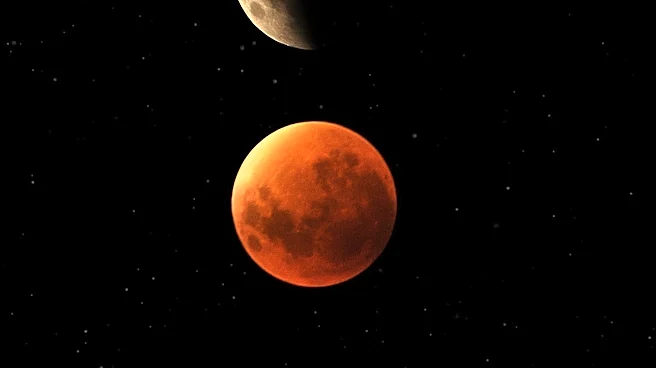
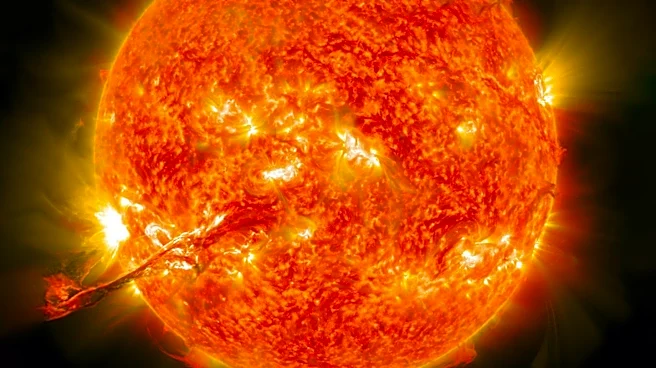
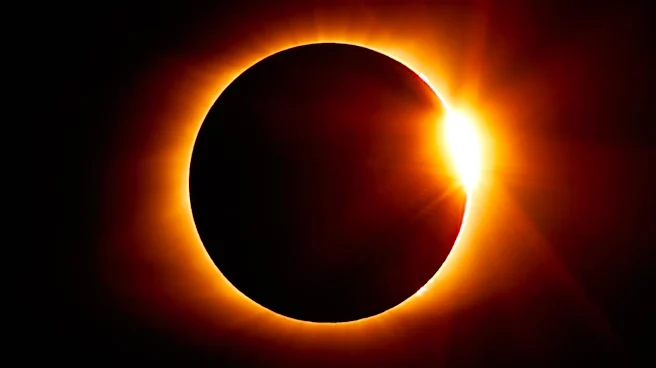
Astrophotography has played a crucial role in documenting solar eclipses, with the first clear image captured 175 years ago. This practice continues to reveal the mysteries of the sun, particularly its corona, which is visible only during total eclipses.
The Smithsonian Astrophysical Observatory highlights the importance of these images in creating a permanent record of celestial events. The historical and scientific significance of eclipse photography is underscored by its ability to provide data on solar phenomena, contributing to our understanding of space weather and solar dynamics.
Why It's Important?
The documentation of solar eclipses through photography has significant implications for scientific research and public engagement. By capturing these rare events, scientists can study the sun's corona and its effects on space weather, which can impact Earth's magnetosphere and technological systems. Additionally, the public's fascination with eclipses fosters interest in astronomy and science, promoting educational outreach and inspiring future generations of scientists.
Beyond the Headlines
The enduring appeal of solar eclipses and their documentation reflects humanity's long-standing curiosity about the cosmos. The advancements in astrophotography have enhanced our ability to study celestial events, bridging the gap between historical observations and modern scientific inquiry. This ongoing exploration of the sun's mysteries continues to drive innovation in astronomical research and technology.