





What's Happening?
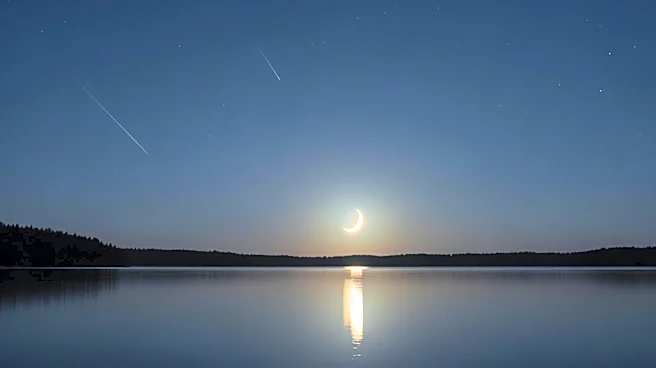
May 2026 is a rare month featuring two full moons, with the second, known as a Blue Moon, set to appear on May 31. This phenomenon occurs due to the lunar cycle's 29.5-day span, occasionally resulting in two full moons within a single calendar month.
The Blue Moon will reach its peak brightness at 4:45 a.m. EDT. Unlike its name, the moon will not appear blue but will be a micromoon, appearing smaller and dimmer as it reaches its farthest point from Earth.
Why It's Important?
Blue Moons are infrequent, occurring roughly every two to three years, making them a special event for skywatchers and astronomers. This celestial occurrence provides an opportunity for educational outreach and public engagement in astronomy. It also highlights the intricate dance of celestial bodies and the impact of lunar cycles on cultural and scientific calendars. Observing such events can enhance public interest in space science and foster a deeper connection with the natural world.
What's Next?
The next monthly Blue Moon will not occur until December 2028, while a seasonal Blue Moon is expected in May 2027. Astronomers and enthusiasts will continue to track lunar cycles and prepare for future rare celestial events. Educational institutions and observatories may organize viewing events to engage the public and promote interest in astronomy.