





What's Happening?
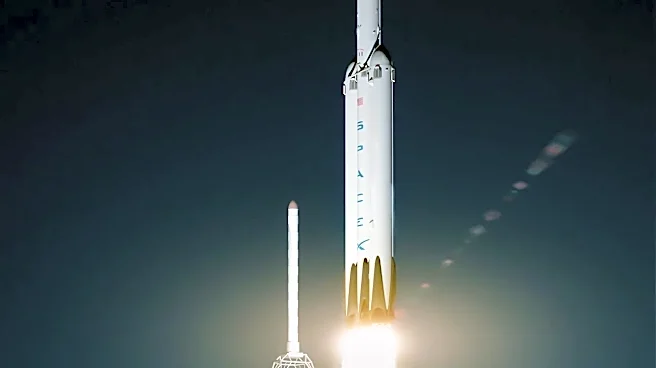
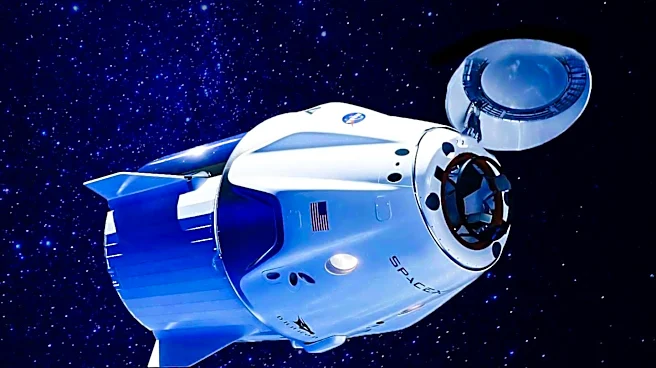
NASA has announced a significant expansion of its Commercial Crew Transportation Capability (CCtCap) contract with SpaceX, ordering three additional crewed Dragon missions. These new missions, designated Crew-15, Crew-16, and Crew-17, are scheduled for
readiness in 2027 and 2028. The contract modification, valued at $946 million, encompasses launch and ground operations, in-orbit services, return and recovery procedures, cargo transportation, and a lifeboat capability while the Dragon spacecraft is docked at the International Space Station (ISS). This brings SpaceX's total number of NASA crew missions under the CCtCap agreement to 17, extending the performance period through 2030. The commercial crew partnership, established in 2014, aimed to develop and operate independent crew transportation systems, with SpaceX's Dragon being certified for NASA crew transportation in November 2020.
Why It's Important?
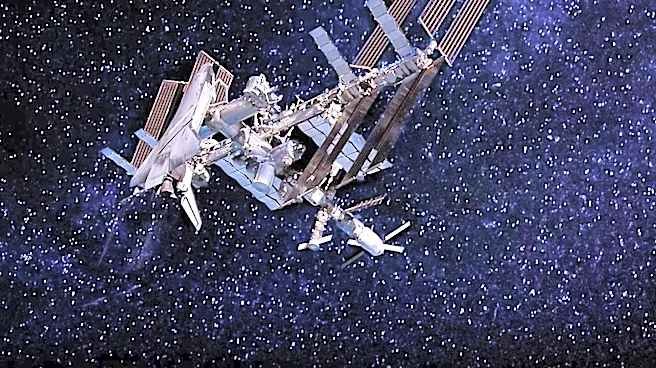
This expansion is crucial for maintaining a continuous human presence aboard the International Space Station, ensuring its operational and scientific productivity well into the next decade. By securing additional commercial flights, NASA reinforces its strategy of relying on private sector innovation for routine space transportation, freeing up agency resources for more ambitious deep-space exploration initiatives. The arrangement with SpaceX provides NASA with a reliable means to transport up to four astronauts and critical cargo for each station rotation, diversifying its access to space and reducing dependence on a single provider. This sustained investment in commercial spaceflight also stimulates the U.S. aerospace industry, fostering technological advancements and job creation within the sector.
What's Next?
The newly ordered missions, Crew-15, Crew-16, and Crew-17, are slated for readiness in 2027 and 2028, indicating a continued cadence of crew rotations to the ISS. NASA will continue to work closely with SpaceX to ensure the readiness and safety of these upcoming flights, including ongoing evaluations of launch and ground operations, in-orbit services, and recovery procedures. The extension of the CCtCap contract through 2030 suggests a long-term commitment to commercial partnerships for ISS resupply and crew transport. Future developments may include further contract modifications or the integration of other commercial providers as NASA continues to evolve its space transportation strategy.
Beyond the Headlines
The increasing reliance on commercial partners like SpaceX for routine space operations signifies a fundamental shift in NASA's operational model, moving from a primary developer and operator of space vehicles to a procurer of services. This model not only aims for cost-efficiency but also fosters a competitive commercial space market, potentially accelerating innovation and reducing the overall cost of access to space. The long-term commitment to the ISS, as evidenced by these extended contracts, underscores its continued importance as a platform for scientific research and international collaboration, even as plans for future lunar and Martian missions progress. This approach could serve as a blueprint for future government-private sector collaborations in other high-tech and infrastructure domains.