
What's Happening?
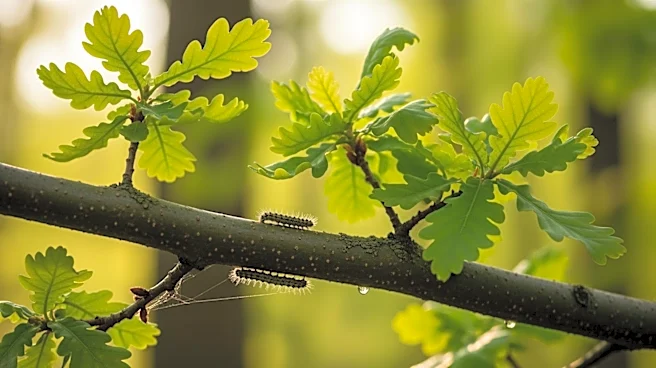
In northern Bavaria, Germany, oak trees have developed a unique defense mechanism against gypsy moth caterpillars. During a massive outbreak in 2019, these caterpillars caused significant damage by feeding
on the leaves of oak trees. Researchers from the University of Würzburg discovered that heavily infested oak trees delayed the opening of their leaves by three days the following spring. This delay resulted in a lack of food for the newly hatched caterpillars, leading to a significant reduction in their population and the damage they could inflict. The study utilized satellite imagery to analyze the condition of tree canopies over a 2400-square-kilometer area, revealing that this tactic reduced leaf damage by 55% compared to the previous year.
Why It's Important?
This discovery highlights the adaptive strategies of oak trees in response to environmental stressors, offering insights into natural pest control methods. The ability of trees to alter their growth patterns in response to insect infestations could inform forest management practices and conservation efforts. By understanding these natural defense mechanisms, scientists and policymakers can develop more sustainable approaches to managing forest ecosystems and mitigating the impact of pests. This research also underscores the importance of biodiversity and the complex interactions within ecosystems that contribute to resilience against environmental challenges.
What's Next?
Further research is needed to explore the underlying mechanisms of this adaptive response and its prevalence among other tree species. Scientists aim to investigate whether similar delaying tactics are employed by other deciduous plants and how these strategies might be affected by climate change. Understanding the genetic and physiological basis of this response could lead to the development of new strategies for enhancing forest resilience and pest management. Additionally, the findings may prompt further studies on the impact of climate change on the timing of leaf emergence and its implications for forest health.