



What's Happening?
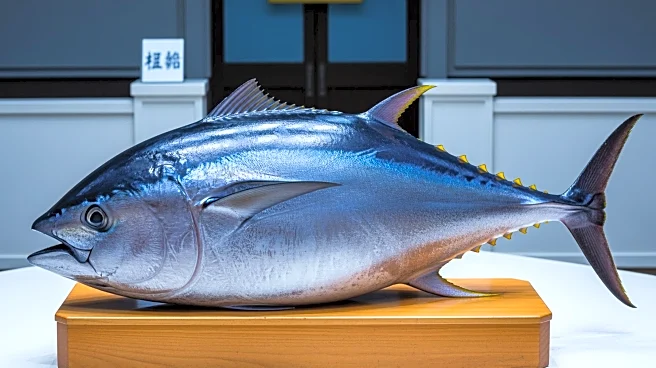
Kiyoshi Kimura, president of Kiyomura Corp, has set a new record by purchasing a giant bluefin tuna for 510 million yen (approximately $3.25 million) at the annual New Year auction held at Tokyo's Toyosu fish market. The tuna, weighing 243 kilograms,
was caught off the coast of Oma in northern Japan, a region renowned for its high-quality tuna. This purchase surpasses Kimura's previous record of 333.6 million yen set in 2019. Despite the high price, Kimura has assured that customers at his Sushizanmai restaurant chain will pay standard prices for the tuna. The auction is a traditional event that attracts large crowds and high bids, with the Oma tuna being particularly prized.
Why It's Important?
The purchase highlights the cultural and economic significance of the New Year auction in Japan, where high bids are often seen as a symbol of optimism for the coming year. Kimura's record-breaking bid reflects confidence in the economic outlook under Japan's new government led by Prime Minister Sanae Takaichi. Additionally, the event underscores the ongoing demand for bluefin tuna, a species that has been the focus of conservation efforts due to past overfishing. The International Union for Conservation of Nature (IUCN) has recently reclassified Pacific bluefin tuna from 'vulnerable' to 'near threatened', indicating some recovery in the population due to international conservation measures.
What's Next?
Following the auction, the purchased tuna was immediately processed and distributed to various Sushizanmai locations across Japan. The high-profile purchase is expected to boost the restaurant chain's visibility and attract customers eager to taste the prized fish. On a broader scale, the event may influence market dynamics and pricing strategies within the seafood industry, particularly concerning high-demand species like bluefin tuna. Continued monitoring of tuna populations and adherence to international quotas will be crucial to ensure sustainable fishing practices.
Beyond the Headlines
The auction and Kimura's purchase also highlight the intersection of tradition and modern conservation efforts. While the event is a cultural staple, it raises questions about the sustainability of such high-demand species. The balance between cultural practices and environmental responsibility remains a critical issue, as does the role of high-profile purchases in promoting awareness and support for conservation initiatives. The ongoing recovery of bluefin tuna populations may serve as a model for other species facing similar threats.