
What's Happening?
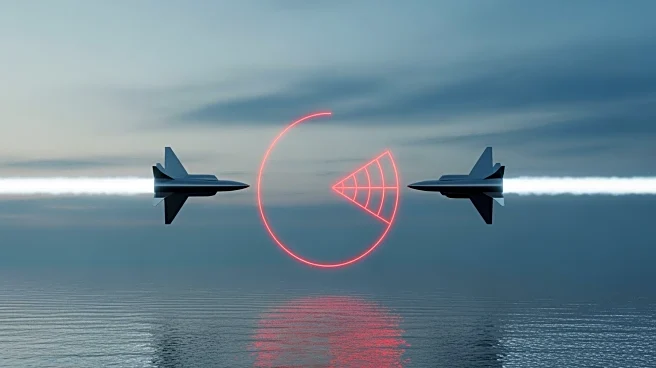
Japan has reported that Chinese fighter jets directed fire-control radar at Japanese military aircraft in two separate incidents near the Okinawa islands. This action, described as 'dangerous' by Japan's
Defense Minister Shinjiro Koizumi, has led to a formal protest lodged with China. The incidents occurred amidst heightened tensions between Japan and China, particularly over Taiwan, which China claims as its territory. The radar targeting is considered a provocative act as it signals a potential attack, prompting Japan to respond with scrambled F-15 fighters. China, however, has denied these allegations, accusing Japanese aircraft of disrupting its naval exercises. The situation has further strained relations between the two countries, with Japan warning of potential responses to any Chinese military actions that threaten its security.
Why It's Important?
The incidents underscore the growing military tensions in the East Asian region, particularly concerning Taiwan's status and security. Japan's response highlights its strategic importance and its role as a key U.S. ally in the region, hosting significant U.S. military forces. The radar targeting incident could lead to increased military readiness and potential confrontations, affecting regional stability. The U.S., while not directly commenting, has shown support for Japan, indicating the broader geopolitical implications involving U.S.-China relations. The situation also reflects China's assertive military posture in the region, which could lead to further diplomatic and military challenges for neighboring countries and the U.S.
What's Next?
Japan is likely to continue monitoring Chinese military activities closely and may increase its defense readiness in response to further provocations. Diplomatic efforts may be pursued to de-escalate tensions, but the potential for military confrontations remains. The U.S. may also play a role in mediating or supporting its allies in the region. Additionally, China's military activities and its stance on Taiwan will continue to be a focal point in regional security discussions, potentially influencing future defense policies and alliances.
Beyond the Headlines
The incidents highlight the complex dynamics of regional security in East Asia, where historical territorial disputes and modern geopolitical strategies intersect. The use of fire-control radar is a significant escalation, reflecting the broader strategic competition between China and its neighbors. This development could lead to increased military spending and strategic realignments in the region, as countries seek to bolster their defenses against perceived threats. The situation also raises questions about the effectiveness of existing diplomatic channels and the potential need for new frameworks to manage regional security challenges.