
What's Happening?
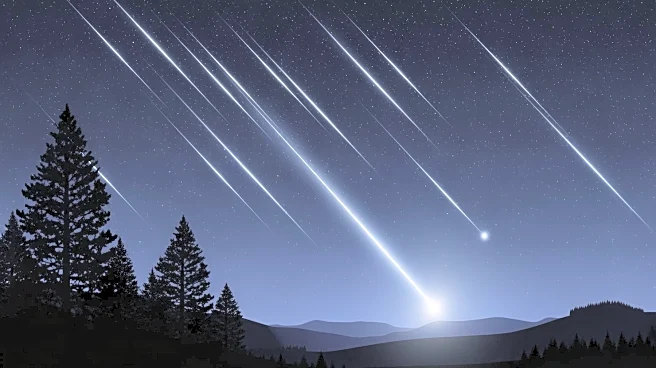
The Geminid meteor shower, one of the most anticipated astronomical events of the year, is set to peak on the night of December 13 into December 14. This meteor shower is renowned for its bright and colorful
meteors, which are visible from 10 p.m. onwards, making it one of the few meteor showers with good visibility before midnight. The meteors originate from the asteroid 3200 Phaethon and are expected to appear at a rate of 40 to 50 per hour. This year, the viewing conditions are particularly favorable due to a waning crescent moon, which will not rise until after midnight, allowing for darker skies. In Oregon, the weather is expected to cooperate, with clouds thinning over the weekend, providing a rare opportunity for clear skies in the region, especially in eastern Oregon.
Why It's Important?
The Geminid meteor shower is significant not only for its visual spectacle but also for its accessibility to the general public. Unlike many astronomical events that require specialized equipment, the Geminids can be enjoyed with the naked eye, making it an inclusive event for stargazers. The favorable weather conditions in Oregon this year enhance the opportunity for residents and visitors to experience this natural phenomenon. This event also highlights the importance of dark sky preservation, as light pollution can significantly diminish the visibility of such celestial events. The Geminids offer a chance to raise awareness about the impact of artificial lighting on night skies and the need for conservation efforts.
What's Next?
As the peak of the Geminid meteor shower approaches, stargazers are encouraged to find locations with minimal light pollution to maximize their viewing experience. In Oregon, areas like the Oregon Outback International Dark Sky Sanctuary are ideal for observing the meteors. The National Weather Service forecasts suggest that while some areas may still experience cloud cover, regions in eastern Oregon are likely to have clearer skies. This could lead to increased travel to these areas by astronomy enthusiasts. Additionally, the event may prompt discussions on the importance of maintaining dark sky areas and the potential for future meteor shower viewings.