




What's Happening?
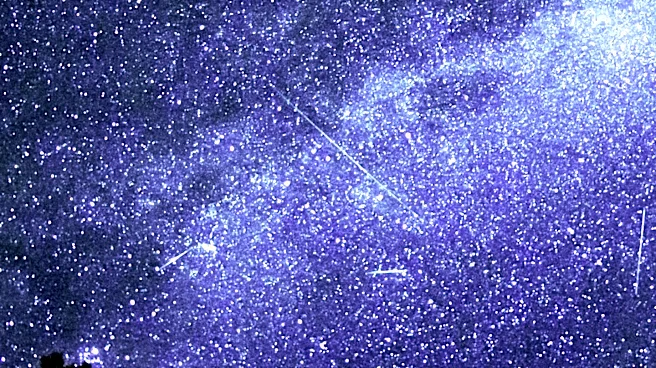
Astronomy Magazine has spotlighted the open cluster NGC 6709, a rich grouping of young stars located in the constellation Aquila the Eagle. This celestial event is particularly visible just after sunset and before moonrise, providing an excellent opportunity
for stargazers. The cluster is situated near the Summer Triangle, which is formed by the bright stars Deneb, Vega, and Altair. NGC 6709 is located approximately 5 degrees southwest of the star Zeta Aquilae and is visible with small telescopes. The cluster spans about 13 arcminutes and shines at a magnitude of 6.7, making it accessible to amateur astronomers. Observers can expect to see several dozen stars with a 4-inch telescope, and potentially over 100 stars with larger scopes.
Why It's Important?
The visibility of NGC 6709 offers a unique opportunity for amateur astronomers and enthusiasts to observe a distinct celestial feature. Such events not only enhance public interest in astronomy but also provide educational opportunities for learning about star clusters and their formation. Observing celestial events like this can inspire future generations to pursue studies in astronomy and related sciences. Additionally, these events foster community engagement through shared stargazing experiences, promoting a broader appreciation for the night sky and the universe.
What's Next?
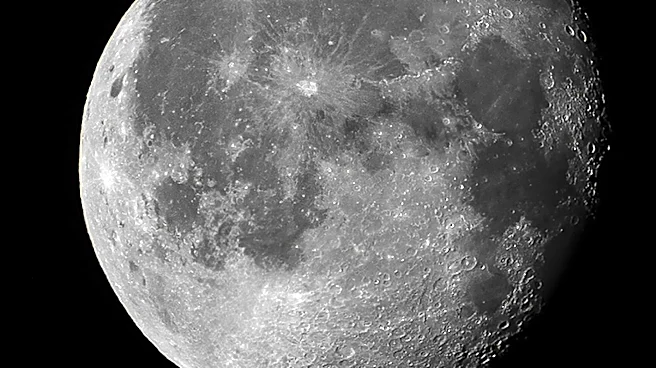
As the moon continues to rise later each night, the window for observing deep-sky objects like NGC 6709 will expand, offering more opportunities for stargazing. Enthusiasts are encouraged to take advantage of this period to explore other celestial phenomena visible in the night sky. Astronomy clubs and observatories may organize events to facilitate public viewing and provide educational resources. The ongoing interest in such events could lead to increased participation in astronomy-related activities and discussions.