


What's Happening?
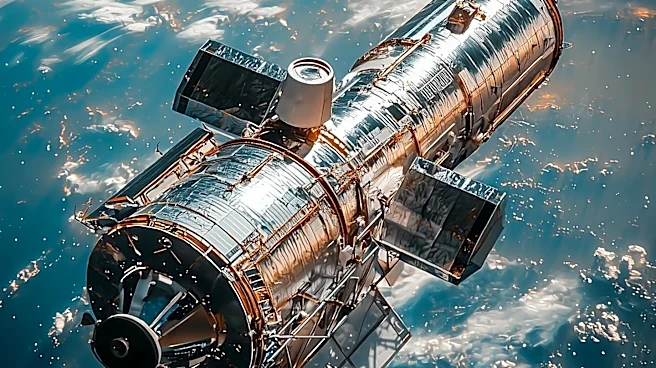
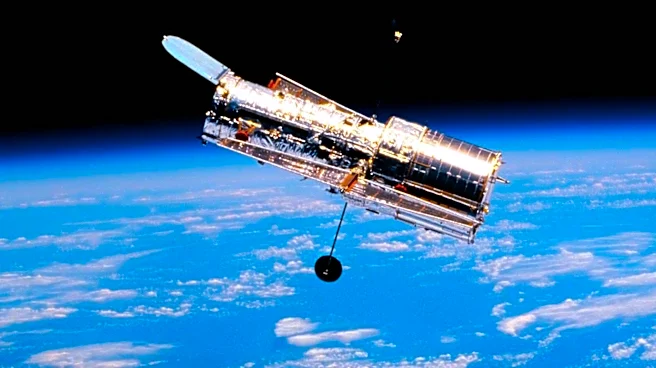
Scientists have, for the first time, combined observations from NASA’s Hubble Space Telescope and the James Webb Space Telescope to study some of the smallest and dimmest Trans-Neptunian Objects (TNOs) beyond Neptune. These icy worlds are considered relics
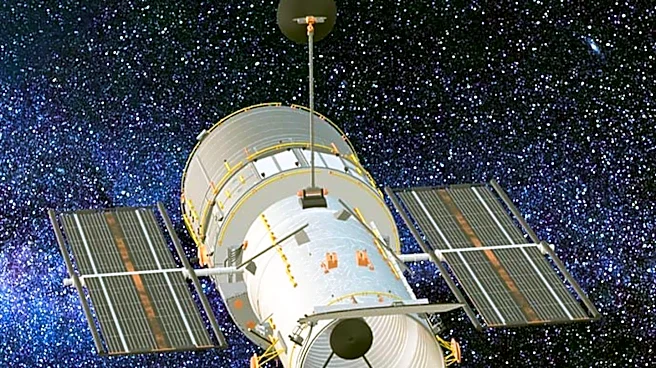
from the early solar system, representing planetesimals that never fully developed into planets. The collaborative effort, led by PhD candidates Marielle Eduardo (University of Victoria) and Anastasia Morgan (Northern Arizona University), involved simultaneous observations where Hubble recorded visible light and Webb measured infrared signatures. They examined the colors, compositions, sizes, and orbits of 27 newly discovered TNOs, some as small as 5 kilometers across, which are beyond the reach of ground-based telescopes. The findings, published in The Astronomical Journal, revealed fewer tiny TNOs than expected and indicated that their surfaces have preserved their primordial states far better than previous models predicted. This suggests that collisions might not have been as significant a factor in their evolution as once believed, and that these bodies retain their original colors, offering clues about their formation.
Why It's Important?
This research significantly alters our understanding of planet formation and the early solar system. The unexpected preservation of primordial surfaces on TNOs challenges existing models that assumed more frequent collisions and surface alteration. The discovery that the smallest TNOs exhibit the same color relationships as their larger counterparts implies that the process of planetesimal formation might follow more universal rules, largely independent of local conditions in the protoplanetary disk. This insight is crucial for refining theories about how planets, including those in our own solar system, came into being. Furthermore, the successful collaboration between the Hubble and Webb telescopes demonstrates a powerful new approach to astronomical research, enabling the study of objects previously undetectable by either telescope alone. This combined capability opens new avenues for exploring the most distant and faint objects in our solar system, providing unprecedented data to unravel its origins.
What's Next?
The findings suggest a need for re-evaluating current models of planetesimal formation and the early solar system's dynamics. Future research will likely focus on understanding why TNOs have retained their original compositions and colors, and why there are fewer small TNOs than predicted. Astronomers may continue to leverage the combined power of the Hubble and Webb telescopes to observe more of these faint, distant objects, gathering additional data to refine their theories. This could involve searching for more TNOs and conducting more detailed analyses of their surface compositions and orbital characteristics. The insights gained could also inform studies of exoplanetary systems, providing a broader context for understanding planet formation across the universe. The ongoing analysis of these 'frozen remnants' will continue to provide valuable clues about the conditions 4.5 billion years ago.
Beyond the Headlines
The ability of these tiny, distant objects to 'remember' and preserve the history of their formation raises profound questions about the resilience of cosmic materials and the processes that govern the evolution of celestial bodies. It highlights the limitations of our current models and the continuous need for observational data to challenge and refine scientific understanding. The collaborative success of Hubble and Webb also underscores a broader trend in scientific exploration: the increasing reliance on multi-instrument approaches to overcome individual limitations and achieve breakthroughs. This synergy not only enhances our observational capabilities but also fosters international scientific cooperation, pushing the boundaries of human knowledge about the cosmos. The study of these ancient, icy worlds offers a unique window into the fundamental building blocks of planets, potentially revealing universal principles of cosmic construction.