



What's Happening?
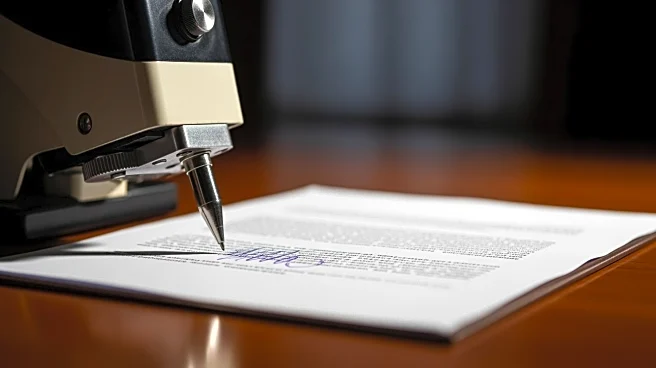
The Biden administration has come under scrutiny for its use of an autopen to sign clemency orders during President Biden's tenure. The autopen, a device that replicates a person's signature, was used to authorize a record number of pardons and commutations,
totaling over 4,200. This included commuting the death sentences of 37 federal inmates. The use of the autopen has been defended by Biden and his allies, including Sen. Chris Van Hollen, who stated that Biden reviewed the pardons, particularly those related to mandatory minimum sentences for drug offenses. However, critics, including House Oversight Committee Chairman James Comer, have raised concerns about the legality and transparency of this practice. The committee has subpoenaed former White House Chief of Staff Jeff Zients as part of its investigation into the matter.
Why It's Important?
The controversy surrounding the use of the autopen raises significant questions about executive authority and transparency in government actions. The practice has sparked a debate over the legitimacy of decisions made without direct presidential oversight, potentially undermining public trust in the administration. The investigation by the House Oversight Committee highlights the political tensions between the Biden administration and Republican lawmakers, who are questioning the validity of the clemency orders. This issue also touches on broader concerns about the use of technology in governance and the implications for accountability and decision-making processes.
What's Next?
The House Oversight Committee is expected to continue its investigation into the use of the autopen, with further testimonies and subpoenas likely. The outcome of this investigation could lead to legislative or procedural changes regarding the use of autopen and similar technologies in government. Additionally, the political fallout from this controversy may influence public perception of the Biden administration and its handling of executive powers. The investigation's findings could also impact future administrations' use of technology in executing presidential duties.