
What's Happening?
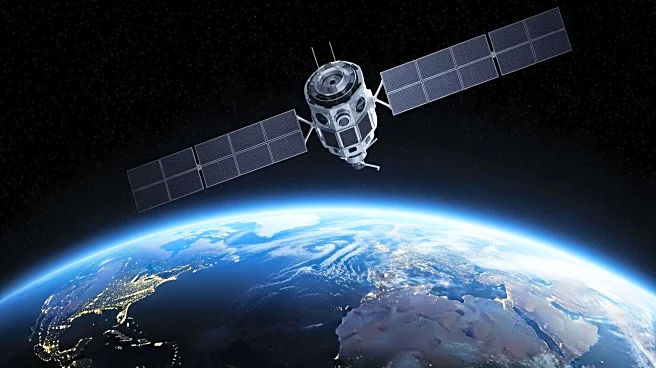
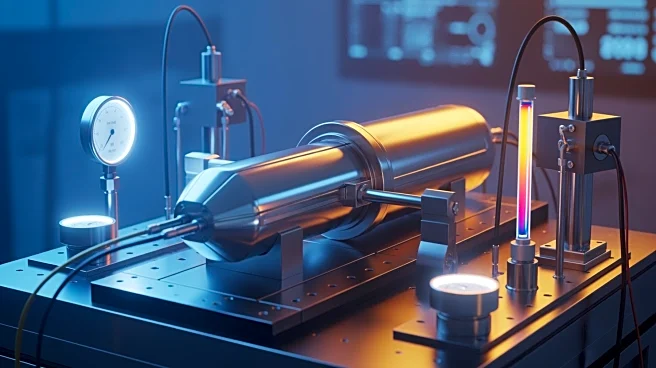
NASA's StarBurst instrument has successfully completed extreme temperature tests at the Marshall Space Flight Center in Huntsville, Alabama. Designed to detect short gamma-ray bursts, StarBurst underwent
rigorous thermal and vibration testing to ensure its readiness for space conditions. The instrument is now awaiting calibration following its integration in Canada. StarBurst aims to detect up to 10 gamma-ray bursts per year, providing insights into neutron star mergers and the formation of heavy metals in the universe.
Why It's Important?
The successful testing of StarBurst is a critical step in advancing our understanding of cosmic phenomena. By detecting gamma-ray bursts, StarBurst will contribute to the study of neutron star mergers, which are key to understanding the universe's heavy metal formation. This mission supports NASA's broader astrophysics goals and demonstrates the agency's commitment to pioneering space exploration technologies. The data collected could have significant implications for astrophysics and our understanding of the universe's origins.
What's Next?
StarBurst will undergo further calibration and testing before its anticipated launch in 2027. The mission is expected to coincide with the next run of the Laser-Interferometer Gravitational Wave Observatory, maximizing the potential for joint gamma-ray and gravitational-wave detections. Successful integration and testing will pave the way for future missions, potentially leading to new discoveries in astrophysics and enhancing our understanding of cosmic events.