


What's Happening?
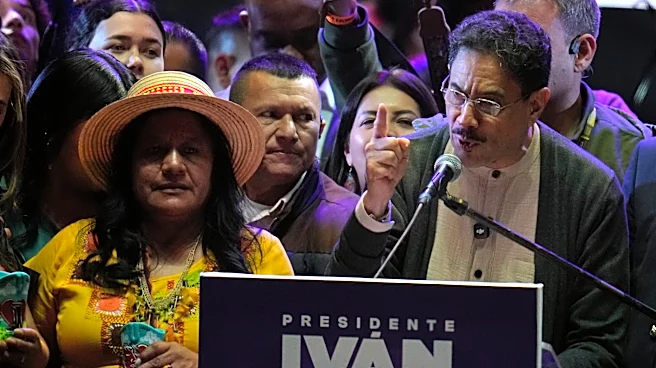
In Colombia, the first round of the presidential election concluded with Aberaldo de la Espriella, a right-wing candidate known for his tough-on-crime stance, leading the race. He will face Iván Cepeda, a progressive senator and ally of outgoing President
Gustavo Petro, in a runoff election. De la Espriella secured 44% of the votes, while Cepeda garnered 41%, with nearly all votes counted. The election is seen as a referendum on Petro's policies, particularly his approach to peace negotiations with armed groups. Cepeda and Petro have raised concerns about potential vote manipulation, although no evidence has been provided. The election occurs ten years after Colombia's historic peace pact with FARC, which has not fully quelled violence in the country.
Why It's Important?
The outcome of this election could significantly impact Colombia's future, particularly its approach to handling armed groups and maintaining peace. De la Espriella's promise to crack down on criminal organizations contrasts sharply with Cepeda's commitment to continue peace negotiations. This election also reflects broader regional trends, where voters are increasingly favoring candidates who promise security over progressive reforms. The result could influence Colombia's relations with the United States, especially given de la Espriella's alignment with President Trump's policies. The election's outcome will signal whether Colombia will continue Petro's progressive agenda or shift towards a more conservative, security-focused approach.
What's Next?
The runoff election is scheduled for June, where de la Espriella is expected to consolidate support from other conservative voters. The international community, including the United States, may closely monitor the election due to its potential implications for regional stability and U.S.-Colombia relations. Both candidates will likely intensify their campaigns, focusing on security and peace strategies. The election's outcome will determine the direction of Colombia's domestic and foreign policies, particularly in terms of security and economic reforms.