

What's Happening?
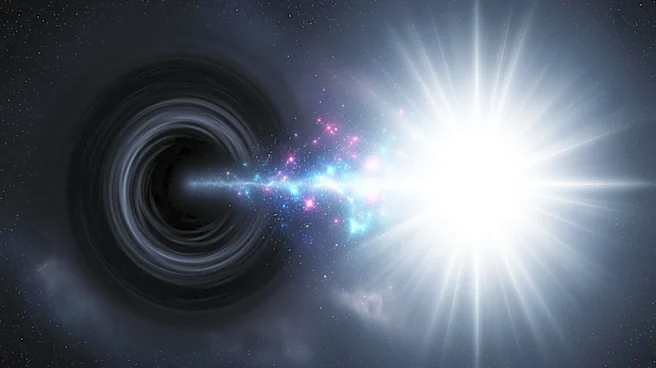
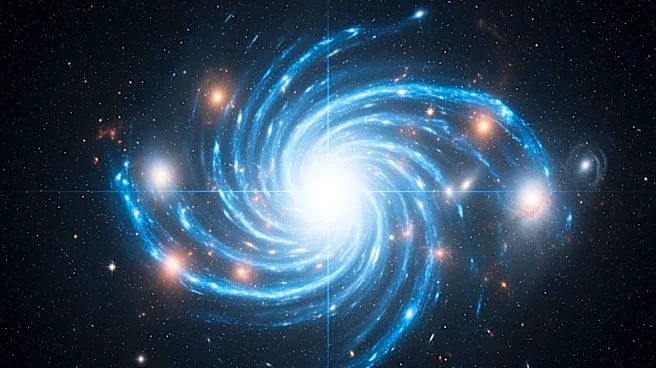
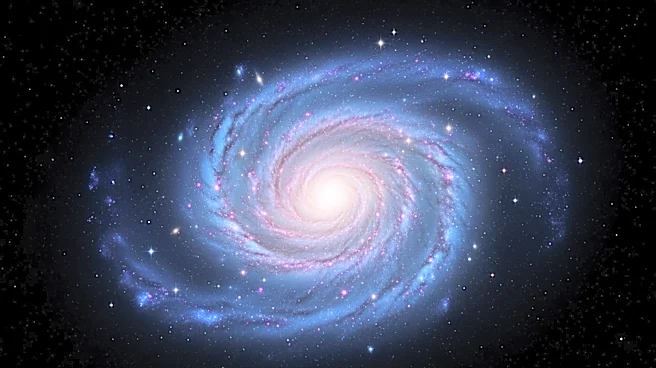
Researchers at the University of Arizona's Steward Observatory, led by Weizhe Liu and Xiaohui Fan, have identified powerful galactic winds emanating from quasars that may have halted star formation in young galaxies shortly after the Big Bang. Published
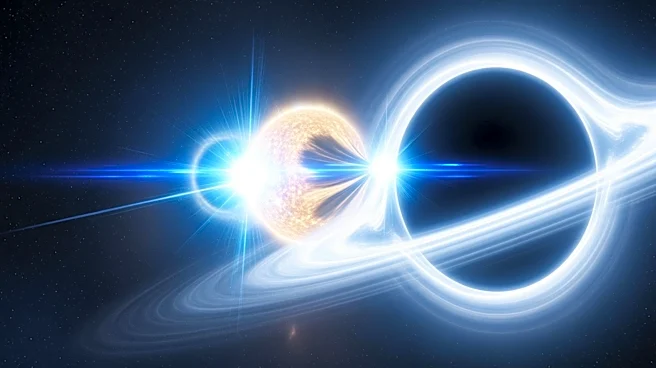
in Nature, the study reveals that these 'quasar winds' are capable of expelling hundreds of solar masses of material annually, impacting the entire galaxy by disrupting surrounding gas and dust. The team utilized the James Webb Space Telescope to observe 27 quasars from a billion years post-Big Bang, finding that six exhibited extraordinarily fast winds reaching speeds of up to 5,000 miles per second. These findings suggest that such winds were more common in the early universe, potentially explaining why many young galaxies ceased star formation prematurely.
Why It's Important?
This discovery provides critical insights into the role of supermassive black holes in galaxy evolution. The ability of quasar winds to expel gas from galaxies could explain the early cessation of star formation, challenging existing paradigms of galaxy development. Understanding these processes is vital for cosmology and astrophysics, as it sheds light on the interactions between black holes and their host galaxies. The findings also suggest that these winds could influence not just their host galaxies but also the intergalactic medium, potentially affecting regions hundreds of thousands of light-years away. This research could lead to a reevaluation of how galaxies evolve and the factors that influence their growth and development.
What's Next?
Future research will likely focus on further exploring the mechanisms behind quasar winds and their impact on galaxy evolution. Scientists may use advanced telescopes to observe more quasars and gather additional data on their frequency and effects. Understanding the lifespan of these winds and their long-term impact on galaxies and the intergalactic medium will be crucial. Additionally, researchers may investigate how these findings can be integrated into existing models of galaxy formation and evolution, potentially leading to new theories and insights into the early universe.
Beyond the Headlines
The study highlights the complex relationship between supermassive black holes and their host galaxies, emphasizing the need to consider these interactions in cosmological models. The findings also raise questions about the role of quasar winds in shaping the structure and composition of the universe. As researchers continue to explore these phenomena, they may uncover new aspects of galaxy dynamics and the influence of black holes on cosmic evolution. This research underscores the importance of advanced observational tools like the James Webb Space Telescope in expanding our understanding of the universe.