







What's Happening?
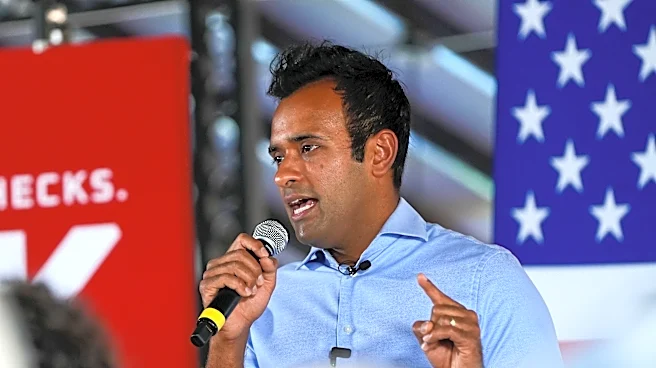
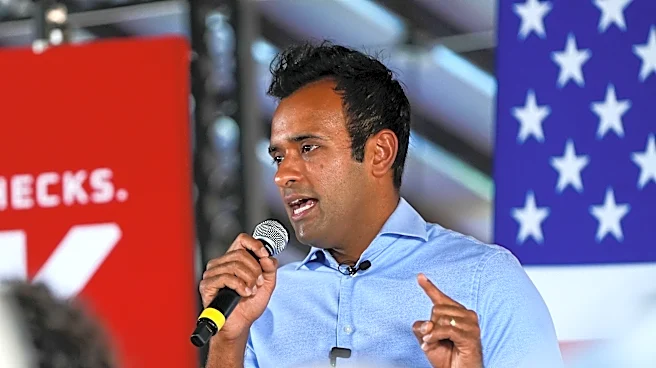
The use of Flock cameras has emerged as a significant point of contention in the Ohio gubernatorial race, with Democratic candidate Dr. Amy Acton advocating for a statewide ban and Republican candidate Vivek Ramaswamy expressing concerns about privacy
while acknowledging their utility. Dr. Acton stated on social media that while public safety is a priority, it should not come at the expense of privacy rights, asserting that Flock cameras pose serious risks and are prone to abuse. Conversely, Governor Mike DeWine views the technology as an effective tool for safety, arguing that potential misuse does not negate its overall value. Ohio Attorney General Andy Wilson echoed this sentiment, highlighting the cameras' effectiveness in solving serious crimes like kidnappings and murders. Several cities in Northern Kentucky, including Florence, Newport, Erlanger, and Independence, have already ceased using these cameras, and Hamilton County recently paused their use, with Sheriff Charmaine McGuffey seeking clearer safeguards for data collection and access. Lebanon also voted to discontinue its Flock cameras, with a re-evaluation scheduled for later in September.
Why It's Important?
This debate is critical as it highlights the tension between public safety and individual privacy rights in the digital age. The widespread deployment of surveillance technologies like Flock cameras, which capture and store license plate data, raises significant questions about government oversight, data security, and the potential for an 'authoritarian surveillance state,' as articulated by Ramaswamy. The differing stances of the gubernatorial candidates reflect a broader societal discussion on how to balance the benefits of crime prevention and investigation with the protection of civil liberties. The decisions made at the state level in Ohio could set a precedent for other states grappling with similar issues, influencing future legislation and public policy regarding surveillance technology. The actions of local governments in discontinuing or pausing the use of these cameras underscore the public's growing concern and demand for accountability and transparency in how such technologies are implemented and managed.
What's Next?
The future of Flock cameras in Ohio will largely depend on the outcome of the upcoming gubernatorial election and subsequent legislative actions. If Dr. Amy Acton is elected, a statewide ban on Flock cameras could be pursued, significantly altering the landscape of surveillance technology in Ohio. If Vivek Ramaswamy is elected, the state might see efforts to implement stricter regulations and safeguards to prevent misuse, rather than an outright ban. Local governments that have paused or discontinued the use of these cameras, such as Hamilton County and Lebanon, will continue to deliberate on their long-term policies, potentially influencing other municipalities. The ongoing public discourse and advocacy from privacy groups will likely continue to pressure lawmakers to address these concerns. This issue is expected to remain a prominent topic in public safety and civil liberties discussions, potentially leading to new state-level legislation or judicial challenges regarding the legality and ethical implications of such surveillance tools.
Beyond the Headlines
The debate over Flock cameras extends beyond immediate public safety concerns to touch upon fundamental questions about the nature of a free society and the role of technology in governance. The concept of a 'Chinese-style surveillance state,' as mentioned by Ramaswamy, evokes fears of pervasive government monitoring that could stifle dissent and individual freedoms. This issue forces a re-evaluation of the social contract, where citizens grant certain powers to the state in exchange for protection, but with an expectation that these powers will not be abused. The discussion also highlights the rapid advancement of surveillance technology, often outpacing legal and ethical frameworks. The lack of clear, consistent guidelines for data retention, sharing, and access across different jurisdictions creates a patchwork of policies that can lead to inconsistencies and potential abuses. Ultimately, this debate is about defining the boundaries of state power in an increasingly interconnected world and ensuring that technological progress serves democratic values rather than undermining them.