



What's Happening?
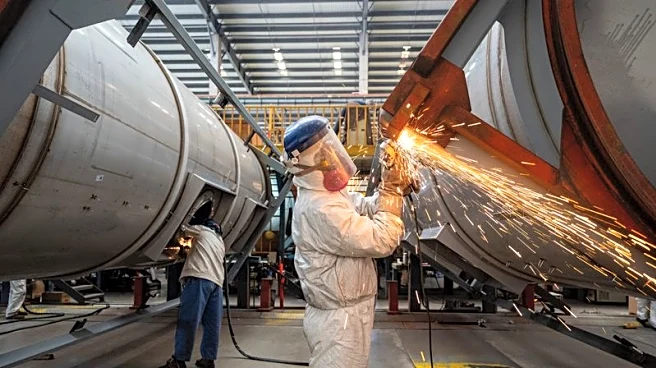
China's manufacturing sector has experienced its fastest growth in a year, as indicated by the official manufacturing purchasing managers' index (PMI), which rose to 50.4 in March from 49.0 in February. This growth surpasses analysts' expectations and
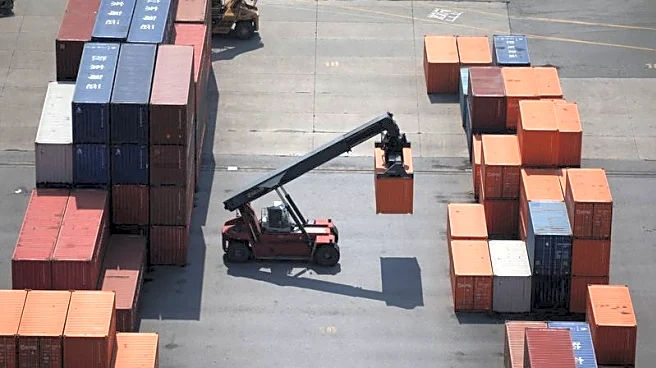
marks a significant recovery from a period of contraction. The increase is attributed to improved global demand for electronics, particularly semiconductors, which has bolstered China's goods exports. However, the ongoing war in the Middle East poses a threat to this growth, as it has led to rising energy prices and increased uncertainty in global markets. The sub-indexes for output and new orders have also shown improvement, although the war's impact on car exports and input costs remains a concern for policymakers.
Why It's Important?
The growth in China's manufacturing sector is crucial as it reflects the country's ability to navigate global supply chain challenges and energy market volatility. This development is significant for the U.S. and other global economies, as China's economic performance can influence international trade dynamics and economic stability. The resilience of China's manufacturing sector, despite geopolitical tensions, suggests a potential for continued global demand for electronics, which could benefit U.S. tech companies reliant on Chinese components. However, the war in the Middle East and its impact on energy prices could lead to increased costs for manufacturers, affecting profit margins and potentially leading to higher prices for consumers worldwide.
What's Next?
Looking ahead, the sustainability of China's manufacturing growth is uncertain due to the ongoing geopolitical tensions and rising energy prices. Policymakers may need to implement structural measures to mitigate the impact of these challenges. The potential for a global economic slowdown, particularly in the European Union, which is a major trading partner for China, could also affect future growth. As China aims to shift its growth engine towards domestic consumption, the success of these reforms will be critical in reducing reliance on external demand. The situation will require close monitoring by global economic stakeholders, including U.S. businesses and policymakers, to assess the potential impacts on international trade and economic stability.
Beyond the Headlines
The current situation highlights the interconnectedness of global economies and the potential ripple effects of geopolitical conflicts on international trade. The reliance on China's industrial chain, similar to the early pandemic period, underscores the importance of diversifying supply chains to mitigate risks. Additionally, the focus on domestic consumption as a growth strategy in China may lead to long-term shifts in global trade patterns, affecting U.S. exporters and multinational companies. The evolving geopolitical landscape and its impact on energy markets could also prompt a reevaluation of energy policies and strategies to ensure economic resilience.