






What's Happening?
The Defense Innovation Unit (DIU) and Space Systems Command (SSC) have announced a joint initiative called GHOST-R, aimed at providing low-cost reconnaissance capabilities in geosynchronous orbit (GEO). This effort falls under SSC’s RG-XX program, which
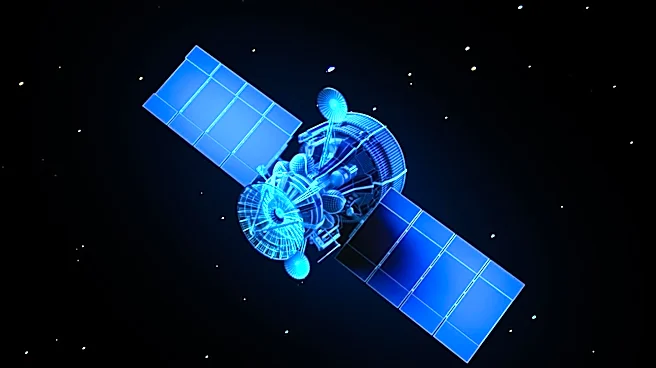
is the official program for the Space Force’s proliferated in-space reconnaissance layer. Scheduled for launch in 2028, GHOST-R intends to utilize commercial space vehicles, buses, and electro-optical payloads to identify and characterize resident space objects, assess battle damage, and improve positive identification. Colonel Bryon McClain, acting portfolio acquisition executive for Space Combat Power, stated that this approach reduces technical risk, lowers lifecycle costs, and delivers vital capabilities to warfighters more rapidly, ensuring a more resilient architecture. Successful prototypes from this initiative are expected to transition directly into the program of record. GEO is considered a critical area for the Pentagon, currently monitored by a limited fleet of specialized assets, primarily Northrop’s GSSAP satellites, supplemented by ground sensors with atmospheric and range limitations.
Why It's Important?
The GHOST-R mission is important because it seeks to address the limitations of current GEO surveillance by introducing a more cost-effective and proliferated reconnaissance layer. The existing system relies on a small number of expensive, specialized assets, which may not be sufficient to monitor the increasing number of objects and potential threats in GEO. By leveraging commercial technology, GHOST-R aims to provide a more agile and affordable solution for space domain awareness. This shift towards commercial capabilities could significantly enhance the Space Force's ability to track and identify objects, assess threats, and maintain situational awareness in a critical orbital region. The initiative also highlights a broader strategy within the DIU's 'Kill Web' portfolio, which focuses on integrating commercial technology and artificial intelligence to improve sensing and targeting capabilities against adversaries. This could lead to a more robust and responsive space architecture for national security.
What's Next?
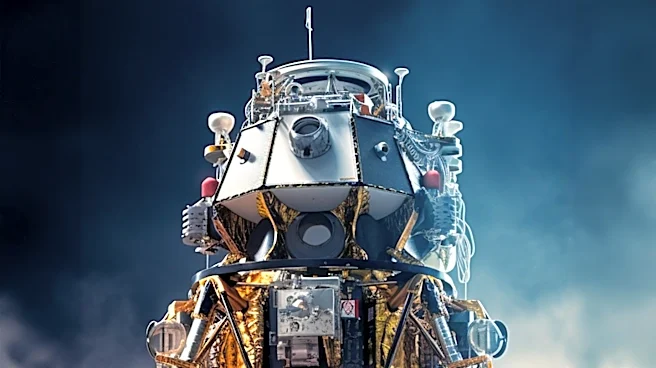
True Anomaly and Northrop Grumman have both received prototype contracts to develop the next-generation reconnaissance vehicles for the GHOST-R mission. Northrop Grumman plans to integrate its ESPASat-L with its ESPAStar payload-rideshare platform, along with a TRL-11-provided optical payload, offering a modular approach to augment existing systems. True Anomaly will initially operate its autonomous Jackal vehicle in conjunction with U.S. Space Force operators, with a future transition to a government-owned and operated RG-XX asset. True Anomaly’s C2 system, Mosaic, will manage mission planning, analysis, and training, providing insights for the full-constellation software required for a proliferated GEO layer. The goal is to move away from reliance on a few exquisite assets, as agile and maneuverable adversary platforms become more capable. The advantage will go to platforms with the endurance, flexibility, and agility to respond to the modern operational environment at a price point that allows for widespread deployment, enabling U.S. forces to maneuver effectively.
Beyond the Headlines
The GHOST-R mission signifies a strategic shift in how the U.S. Space Force approaches space domain awareness, moving towards a more distributed and commercially integrated architecture. This initiative could have profound implications for the future of space security, as it prioritizes resilience and cost-effectiveness over the traditional model of highly specialized, limited assets. The reliance on commercial partners like True Anomaly and Northrop Grumman also underscores a growing trend of public-private collaboration in national defense, potentially fostering innovation and accelerating technological development. Ethically, the increased proliferation of reconnaissance capabilities in GEO raises questions about space traffic management and the potential for misinterpretation of intentions, necessitating clear communication and international cooperation. Long-term, this approach could lead to a more dynamic and adaptable space infrastructure, capable of responding to evolving threats and maintaining U.S. leadership in space.