




What's Happening?
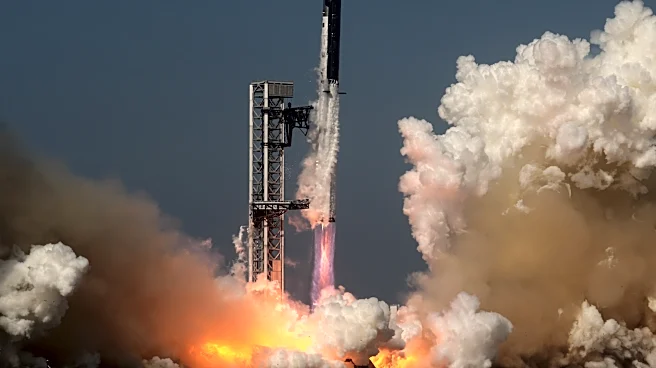
The Federal Aviation Administration (FAA) has grounded SpaceX's Starship V3 following a mishap during its Flight 12 launch on May 22, 2026. The incident involved the Super Heavy booster, which experienced engine failures during its return to the Gulf
of Mexico, leading to a crash landing. The FAA has classified the event as a mishap, requiring SpaceX to conduct a thorough investigation before any further launches can occur. Despite the booster failure, the upper stage of the Starship successfully completed its mission objectives, including deploying Starlink mass simulators and achieving a soft splashdown in the Indian Ocean.
Why It's Important?
This grounding has significant implications for SpaceX's launch schedule and the broader space industry. The delay affects SpaceX's commercial satellite launches and government contracts, as well as the timelines of companies relying on Starship for payload deployment. The incident raises questions about the readiness of the V3 systems for operational use, highlighting the challenges of achieving reliable booster reusability. The FAA's oversight ensures that safety and technical standards are met before resuming flights, impacting SpaceX's rapid development and testing approach.
What's Next?
SpaceX must complete a comprehensive investigation into the mishap, focusing on the root cause of the engine failures. The FAA will oversee this process and must approve SpaceX's corrective actions before allowing further launches. The timeline for resuming flights depends on the complexity of the investigation and the extent of necessary design or manufacturing changes. SpaceX faces pressure to address these issues swiftly while adhering to FAA requirements, potentially delaying future launches and affecting its ambitious schedule.