


What's Happening?
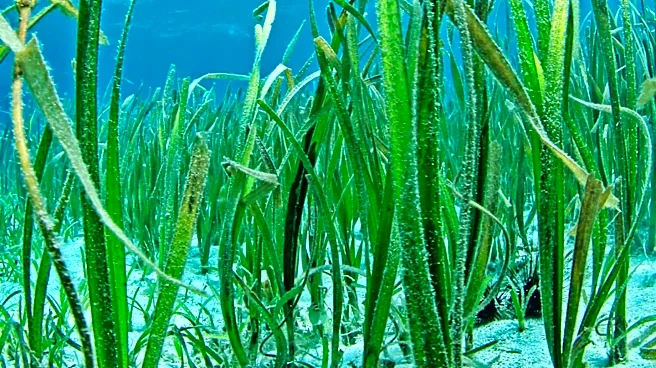
A collaborative team, led by the Collaborative for Bioregional Action Learning and Transformation (COBALT) and including students and staff from Bowdoin College’s Schiller Coastal Studies Center, is actively working to restore declining eelgrass meadows
in Casco Bay, Maine. These vital underwater habitats, crucial for carbon capture and as nurseries for marine life, have seen over half their population disappear due to factors like climate change and invasive green crabs. The 'Seeds of Hope' project, funded by an Environmental Protection Agency Restore America’s Estuaries grant, involves divers collecting eelgrass shoots from healthy meadows near Haskell Island. These reproductive shoots are then processed by volunteers who pluck spathes, which are stored until October. The team plans to plant between 300,000 to 500,000 seeds in degrading meadows in the fall, hoping to establish new eelgrass beds. The project also includes research into eelgrass microbiomes and water quality effects.
Why It's Important?
The restoration of eelgrass meadows in Casco Bay is critically important for the ecological health and economic stability of the region. Eelgrass serves as a foundational species, providing essential habitat for juvenile fish and lobsters, and playing a significant role in carbon sequestration. The decline of these meadows poses a direct threat to the local fishing and lobster industries, which are vital to Maine's economy. This project highlights the urgent need for conservation efforts to combat the impacts of climate change and invasive species on marine ecosystems. The involvement of Bowdoin College students and community volunteers underscores the power of collaborative, science-driven initiatives in addressing environmental challenges, fostering both scientific research and community engagement in conservation.
What's Next?
The 'Seeds of Hope' project will continue its efforts, with the collected eelgrass spathes being stored in special containers at the Schiller Center’s wet lab until they mature and release their seeds. In the fall, the team plans to plant 300,000 to 500,000 seeds in degrading meadows across Casco Bay, with the hope that they will germinate and establish new eelgrass beds. Research into the microbiome of eelgrass and the effects of water quality on its decline will also continue, providing valuable data for future restoration strategies. The project aims to understand if the loss of eelgrass can be halted or even reversed, potentially adding to the restoration of seagrass meadows throughout Casco Bay and the Gulf of Maine.
Beyond the Headlines
The 'Seeds of Hope' project in Casco Bay represents more than just an ecological restoration effort; it embodies a proactive approach to climate resilience and biodiversity conservation. The project's focus on understanding the microbiome of eelgrass and the impact of water quality delves into the complex interdependencies within marine ecosystems, offering insights that could inform broader conservation strategies. The collaborative model, involving academic institutions, environmental organizations, and community volunteers, demonstrates an effective framework for tackling large-scale environmental challenges. This initiative also highlights the economic vulnerability of coastal communities to ecological degradation, emphasizing that environmental health is intrinsically linked to economic well-being. The long-term success of this project could serve as a blueprint for similar restoration efforts in other vulnerable marine environments, showcasing the potential for human intervention to mitigate environmental damage and restore natural balance.