
What's Happening?
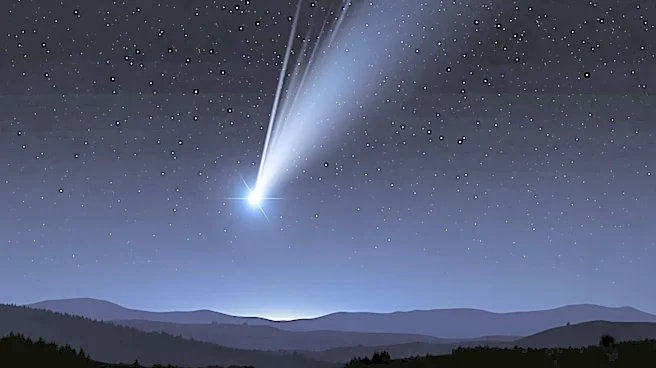
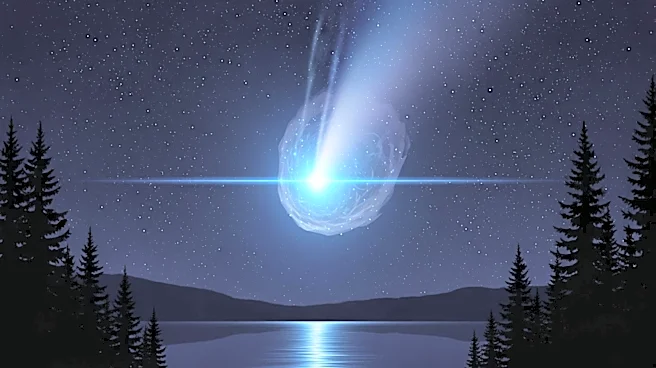
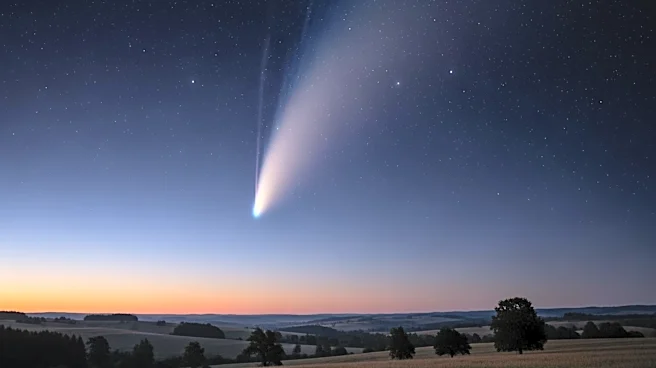
Comet C/2025 R3 (Pan-STARRS) is currently visible in the pre-dawn sky, offering a rare opportunity for stargazers to observe a comet with binoculars or a telescope. The comet, which has been traveling
through the solar system since September, will be closest to the sun on April 19, 2026, and will pass 45.5 million miles from Earth on April 26. The best time to view the comet is two hours before sunrise, when it can be seen in the eastern sky. This celestial event is drawing interest from both amateur and professional astronomers.
Why It's Important?
The visibility of Comet R3 Pan-STARRS provides a unique opportunity for scientific observation and public engagement with astronomy. Comets are valuable to scientists because they are considered to be remnants from the early solar system, offering insights into its formation and evolution. For the public, the event serves as an educational moment, potentially sparking interest in space science and encouraging participation in observational activities. The comet's appearance also highlights the importance of ongoing astronomical research and monitoring of celestial bodies.
What's Next?
As Comet R3 Pan-STARRS approaches its closest point to the sun, astronomers will continue to study its trajectory and characteristics. Observatories may conduct detailed observations to gather data on the comet's composition and behavior. Public interest in the comet could lead to increased participation in stargazing events and educational programs. Future celestial events, such as meteor showers and other comet appearances, will continue to engage and educate the public about the wonders of the universe.