





What's Happening?
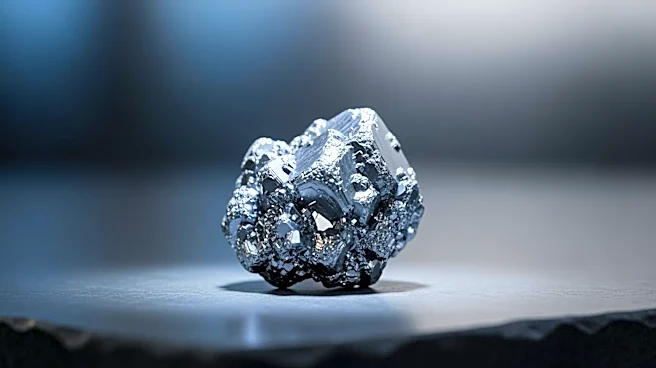
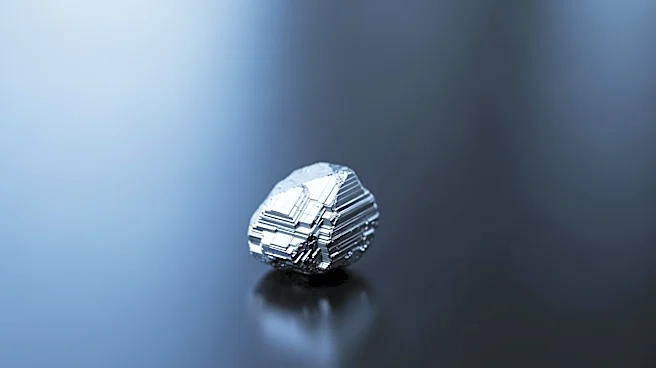
Germany is addressing its dependency on Chinese graphite imports by exploring alternative sources, including the Molo mine in Madagascar. As Europe's largest manufacturing economy, Germany faces a critical supply risk due to its reliance on graphite for
battery production. The German federal government is responding with financial instruments and diplomatic efforts to secure graphite supplies. A scientific delegation recently visited the Molo mine, highlighting its strategic importance. The reclassification of graphite as a Critical Raw Material by the EU underscores its geopolitical significance, prompting Germany to diversify its supply chain.
Why It's Important?
Germany's efforts to secure graphite supplies are crucial for its automotive and manufacturing sectors, which are heavily reliant on battery production. The country's move to diversify its supply chain reflects a broader European strategy to reduce dependency on Chinese imports and enhance supply chain resilience. This shift has significant implications for global trade dynamics and the geopolitical landscape, as countries compete for critical minerals essential for the energy transition. Germany's actions could influence other European nations to adopt similar strategies, impacting global graphite markets.
What's Next?
The German Federal Institute for Geosciences and Natural Resources (BGR) is conducting a study on Madagascar's graphite production, with findings to be presented to Germany's Federal Ministry for Economic Cooperation and Development. This study could lead to formal bilateral supply arrangements and investment in Madagascar's mining sector. Germany's investment frameworks, including the KfW Raw Materials Fund, may support the Molo mine's expansion, further integrating it into European supply chains. The outcome of these efforts will shape Germany's critical minerals strategy and its role in the global graphite market.