






What's Happening?
Democrats are facing criticism for their resistance to the widespread adoption of Waymo's self-driving robotaxis in many blue states and cities, despite the technology's proven safety benefits. While Waymo operates in several red and purple states, Democratic-led
jurisdictions like Boston and New York have largely prevented their deployment. This opposition stems from a coalition of labor unions, anti-tech activists, and politicians who argue that driverless vehicles pose safety risks and threaten millions of human driving jobs. For instance, in Washington, D.C., a proposed bill to authorize Waymo faced protests from labor groups and rideshare drivers concerned about job displacement. However, studies, including one by the Insurance Institute for Highway Safety, indicate that Waymo vehicles are significantly safer than human-driven cars, with 68% fewer reported crashes and 81% fewer injury-causing crashes. Proponents argue that driverless cars could drastically reduce traffic fatalities and injuries, offer more affordable transportation, lower carbon emissions, and provide reliable access for underserved communities.
Why It's Important?
This debate highlights a significant ideological conflict within the Democratic party regarding technological progress, labor protection, and public safety. The resistance to Waymo, despite its potential to save lives and offer societal benefits, is seen by some as a failure of progressive principles, which traditionally embrace scientific and technological advancement for a better future. The core tension lies between protecting existing jobs, particularly in the gig economy, and embracing innovations that could create new opportunities and improve overall quality of life. The outcome of this struggle will not only determine the future of autonomous vehicle deployment in major U.S. cities but also set precedents for how future technological disruptions are managed in terms of labor policy, regulatory frameworks, and public acceptance. It also underscores the challenge of balancing economic concerns with potentially life-saving advancements.
What's Next?
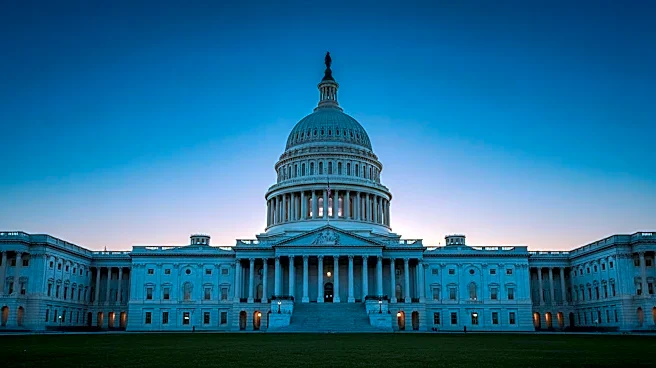
The debate over Waymo's expansion is expected to continue in various Democratic-led jurisdictions. In Washington, D.C., Council member Charles Allen has introduced a bill that seeks a middle ground, authorizing driverless vehicles under strict conditions, including rigorous testing, safety requirements, and a plan for interacting with first responders. This bill also proposes a per-mile tax on driverless vehicles to fund public transit and provide training and compensation for displaced drivers. This approach aims to mitigate job losses and ensure public benefit, but it faces political obstacles, including skepticism from incoming leadership. The success or failure of such nuanced legislative efforts could influence similar proposals in other cities, shaping the future regulatory landscape for autonomous vehicles across the U.S. Companies like Waymo will likely continue to refine their technology, particularly addressing 'edge cases' like unexpected road closures or power outages, to build public trust and overcome regulatory hurdles.
Beyond the Headlines
The resistance to Waymo reveals a deeper societal anxiety about automation and its impact on the workforce, echoing historical concerns about technological unemployment. This situation forces a re-evaluation of what 'progress' means in the 21st century, especially when it involves trade-offs between job security and potentially transformative societal benefits like enhanced safety and accessibility. The ethical implications extend to the responsibility of policymakers to manage technological transitions in a way that supports affected workers while not stifling innovation that could address critical public health issues, such as traffic fatalities. The narrative also touches on the influence of special interest groups, particularly labor unions, in shaping policy decisions, and the challenge for political parties to reconcile diverse stakeholder interests in the face of rapid technological change. This conflict could redefine the progressive movement's stance on technology and its role in societal advancement.