






What's Happening?
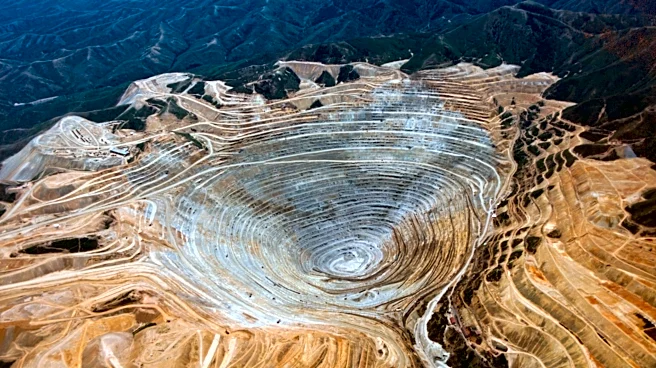
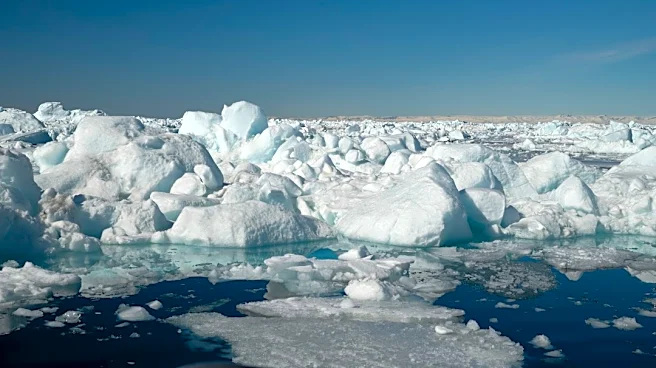
Evidence of widespread air pollution from early 20th-century copper production has been discovered in Arctic ice, with scientists tracing significant arsenic and lead contamination back to the Anaconda Copper Mining Company in Montana. A team from the Desert
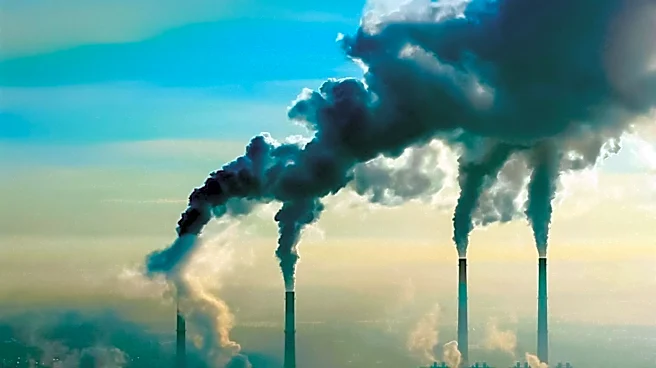
Research Institute (DRI) analyzed 10 ice cores from Greenland, the Russian Arctic, and northern Canada, reconstructing atmospheric levels of toxic heavy metals during the second Industrial Revolution. The ice layers from approximately 1886 to 1918 showed arsenic concentrations up to 15 times higher than pre-Industrial Revolution levels. Atmospheric modeling and historical records from the mine indicate that the Anaconda Copper Mining Company, one of the world's largest copper producers at the time, was emitting an estimated 11,000 tons of arsenic and 4,400 tons of lead per year during its peak production. These toxic metals were carried by winds over the Arctic, eventually settling into the ice layers. Fred Quivik, a historian, noted that the release of these toxic metals was not a secret, with ranchers and farmers observing livestock deaths from arsenic poisoning.
Why It's Important?
This discovery highlights the long-term and far-reaching environmental impact of industrial activities from over a century ago, demonstrating how localized pollution can have global consequences. The elevated levels of arsenic and lead in Arctic ice are significant because exposure to these heavy metals has been linked to declines in IQ and higher rates of certain cancers. The delayed implementation of pollution controls by the Anaconda Copper Mining Company, which waited about a decade to install abatement technology starting in 1919, meant that hundreds of thousands of nearby residents were exposed for decades. This historical environmental injustice underscores the critical importance of timely and effective pollution control measures. The findings also provide valuable data for epidemiologists to investigate potential impacts on human populations from 19th and 20th-century pollution, offering insights into the legacy of industrial contamination on public health.
What's Next?
Researchers suggest that these new findings should be combined with census records to further trace the effects of this historical pollution on human health in the 19th and 20th centuries. This interdisciplinary approach could provide a more comprehensive understanding of the long-term health consequences for populations exposed to industrial emissions. The study may also prompt further investigations into other historical industrial sites and their environmental legacies, potentially uncovering additional widespread contamination. From a policy perspective, this research reinforces the need for stringent environmental regulations and proactive measures to prevent pollution, emphasizing that the environmental costs of industrial activities can persist for generations and across vast geographical distances. It could also inform discussions on environmental accountability and the responsibilities of corporations for historical pollution.
Beyond the Headlines
The tracing of Arctic arsenic to a century-old Montana copper mine reveals a profound ethical and legal dimension concerning historical environmental damage. The fact that the Anaconda Copper Mining Company delayed installing pollution-abatement technology for a decade, despite knowing the toxic nature of its emissions, raises questions about corporate responsibility and the societal value placed on public health versus industrial profit during that era. This historical context provides a stark reminder of the long-term consequences of industrial negligence and the slow, insidious nature of environmental harm. It also highlights the concept of 'environmental debt' – the idea that past generations' industrial activities can impose significant burdens on future generations and distant ecosystems. The ability to reconstruct such detailed historical pollution records from ice cores underscores the power of scientific methods in uncovering hidden truths and holding historical actors accountable, even if only retrospectively. This could influence contemporary environmental policy by emphasizing the need for robust, forward-looking regulations and the precautionary principle in industrial development.