






What's Happening?
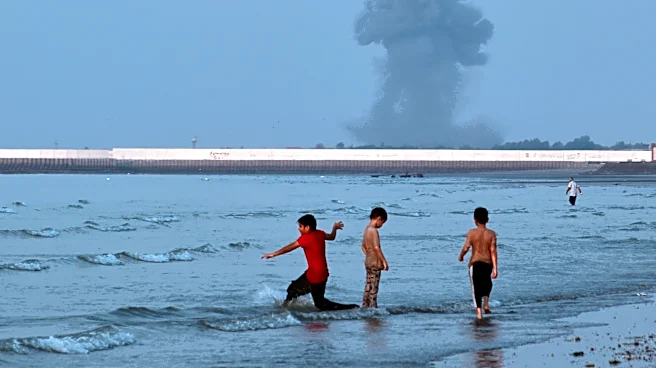
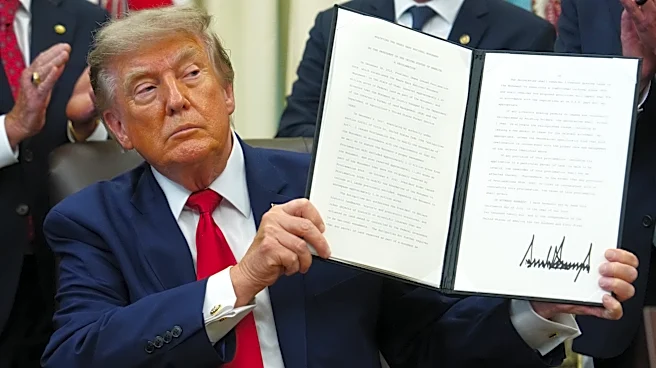
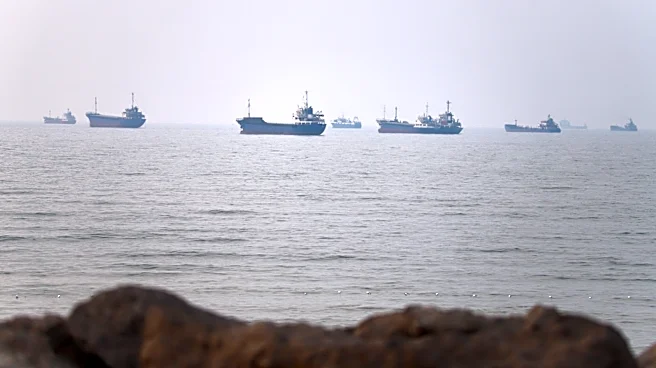
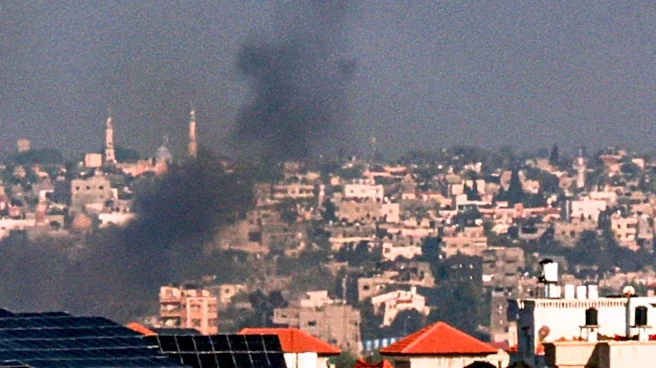
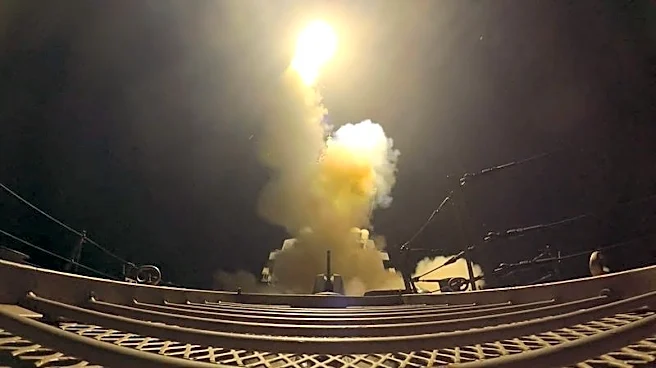
President Trump has ordered U.S. military strikes on Iran for a third consecutive night. This action follows the reinstatement of a naval blockade on Iranian ports and the proposal of new fees for ships passing through the Strait of Hormuz. The decision
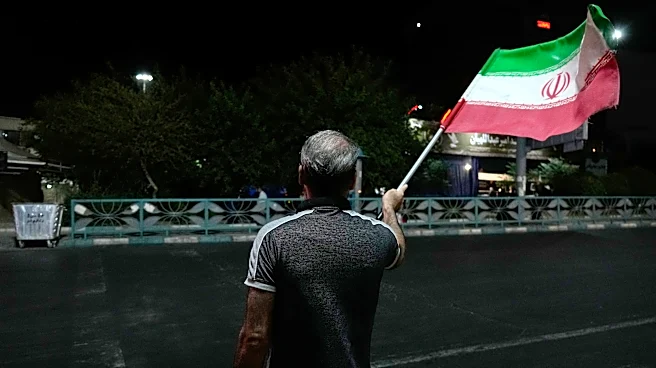
to resume military action and impose economic measures comes amid heightened tensions between the U.S. and Iran. The blockade and subsequent strikes are part of a broader strategy to exert pressure on Iran, which has been a focal point of President Trump's foreign policy. The U.S. aims to curb Iran's influence in the region and address concerns over its nuclear program.
Why It's Important?
The escalation of military actions and economic sanctions against Iran could have significant implications for international relations and global oil markets. The Strait of Hormuz is a critical chokepoint for global oil shipments, and any disruption could lead to increased oil prices, affecting economies worldwide. Additionally, the U.S.'s aggressive stance may strain relations with allies who favor diplomatic solutions. Domestically, this move could impact public opinion and political dynamics, as foreign policy becomes a central issue in upcoming elections. The situation also raises concerns about potential retaliatory actions from Iran, which could further destabilize the Middle East.
What's Next?
The international community will likely monitor the situation closely, with potential diplomatic efforts to de-escalate tensions. The U.S. may face pressure from allies and international organizations to justify its actions and seek peaceful resolutions. Meanwhile, Iran's response will be critical in determining the next phase of this conflict. Possible retaliatory measures from Iran could include targeting U.S. interests in the region or disrupting maritime traffic in the Strait of Hormuz. The U.S. government may also face domestic scrutiny over the decision to engage in military action, influencing future policy decisions.