


What's Happening?
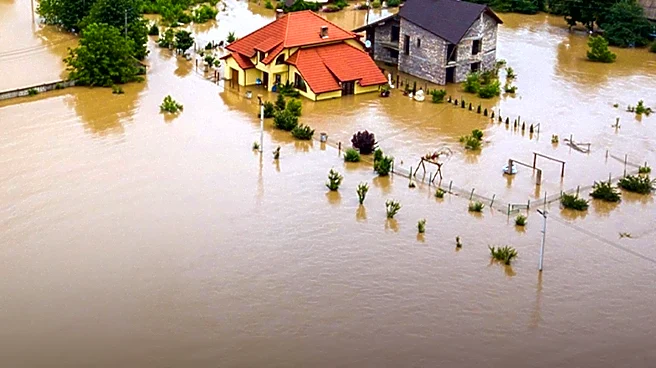
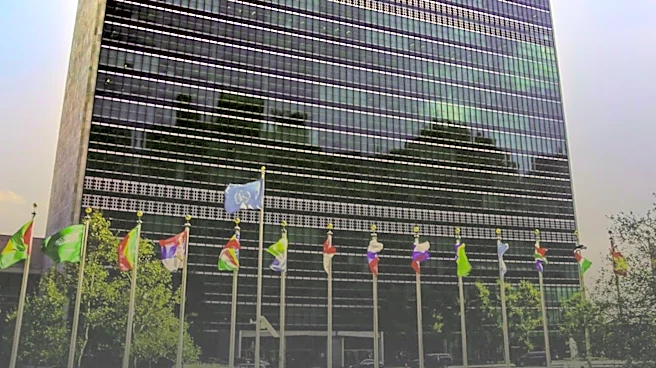
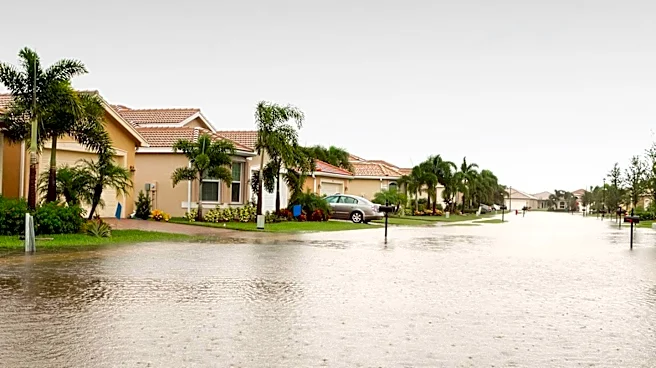
The United Nations reports that communities worldwide face an annual cost of $228 billion to rebuild housing after disasters, with housing losses accounting for 43% of the direct costs from cyclones, floods, tsunamis, and earthquakes. On the International
Day for Disaster Risk Reduction, UN Secretary-General António Guterres emphasized the need for sustained investment in early warnings, local preparedness, safer housing, and resilience-building recovery efforts. The UN Office for Disaster Risk Reduction (UNDRR) noted that while progress has been made in reducing disaster deaths over the past 11 years, economic impacts have not seen similar reductions. Spokesperson Jeanette Elsworth highlighted that only 27% of individuals with advance warning but no household disaster plan or confidence acted on the warning, compared to 83% of those with both a plan and confidence, underscoring the importance of preparedness and trust.
Why It's Important?
The staggering annual cost of $228 billion in housing losses due to disasters represents a significant global economic burden, diverting resources that could otherwise be used for development and poverty reduction. This financial strain disproportionately affects vulnerable communities and exacerbates existing inequalities. The UN's call for increased investment in resilient housing and preparedness is crucial for several reasons: it reduces long-term recovery costs, minimizes displacement, and protects livelihoods. The disparity in action rates between those with and without preparedness plans highlights a critical gap in public awareness and trust, indicating that effective communication and community engagement are as vital as physical infrastructure. Addressing these issues is essential for achieving sustainable development goals and building a more equitable and resilient world in the face of escalating climate and disaster risks.
What's Next?
The UN's emphasis on housing resilience suggests a future focus on integrating disaster risk reduction into urban planning, building codes, and community development programs. Governments, the private sector, and local authorities are urged to prioritize building in safer locations, enforcing resilient construction standards, retrofitting existing homes, and empowering households with knowledge and tools for preparedness. The UN International Organization for Migration (IOM) will continue its efforts, having assisted 1.4 million people in 2025 with disaster risk reduction programs. There will likely be increased advocacy for financial instruments like grants, affordable credit, and insurance to support resilient housing, as well as for rapid liquidity mechanisms for governments after major events. The goal is to shift from reactive humanitarian aid to proactive, preventive investments that build long-term resilience.
Beyond the Headlines
The issue of housing losses from disasters extends beyond mere economic figures; it delves into fundamental human rights and social justice. The displacement of millions annually due to damaged or destroyed homes deepens poverty and disrupts the fabric of communities, affecting education, health, and access to essential services. The UN's message, 'Resilience Starts at Home,' carries a profound ethical dimension, implying that every individual has a right to a safe dwelling and the knowledge to protect it. This also highlights the moral imperative for governments and developers to ensure that housing is not only affordable but also built to withstand environmental threats, especially for the 1.1 billion people living in multidimensional poverty in climate-hazard-exposed regions. The long-term implication is a re-evaluation of development paradigms to prioritize safety and sustainability, ensuring that progress does not inadvertently increase vulnerability to disasters.