


What's Happening?
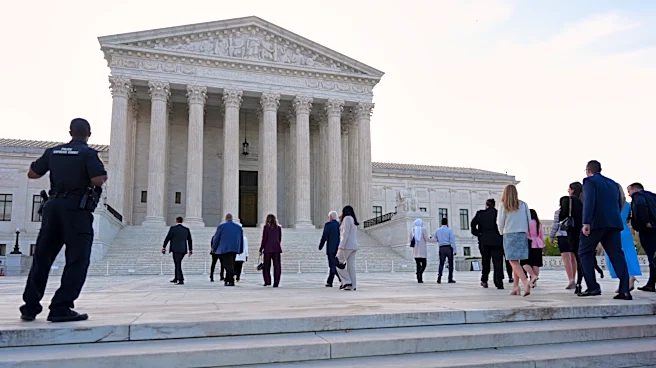
During recent Supreme Court arguments, justices from both sides of the ideological spectrum expressed skepticism about the historical sources cited by the Trump administration in its bid to overturn birthright citizenship. Solicitor General John Sauer
argued that the 14th Amendment was intended to apply only to children of legal immigrants domiciled in the U.S., citing obscure historical materials to support this interpretation. Justices questioned the validity of these sources, with Chief Justice John Roberts describing the argument as 'quirky.' Justice Elena Kagan noted the use of esoteric sources, including remarks from President Abraham Lincoln's funeral. The administration's executive order seeks to deny citizenship to children born in the U.S. to parents lacking legal status or those temporarily in the country.
Why It's Important?
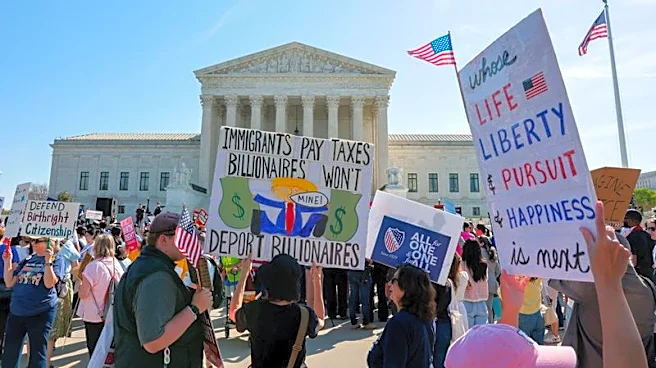
The case challenges the constitutional guarantee of birthright citizenship, a principle that has been considered settled law for over a century. The Trump administration's attempt to reinterpret the 14th Amendment could have far-reaching consequences for immigration policy and the legal status of millions of individuals born in the U.S. The skepticism from the justices suggests potential difficulties for the administration in securing a favorable ruling. A decision against the administration could reaffirm birthright citizenship and impact future executive orders and legislative actions related to immigration.
What's Next?
The Supreme Court is expected to deliver a ruling by July, which will clarify the legal standing of birthright citizenship. The court could affirm lower court rulings blocking Trump's order or address the constitutional question directly. The decision will likely influence ongoing debates about immigration policy and the interpretation of the 14th Amendment. Stakeholders, including legal experts and civil rights organizations, are poised to react based on the ruling's implications for citizenship and immigration.