






What's Happening?
The Benson-Bertsch Center for International Trade and Security Weapons Governance Lab is conducting research into the international regulation of weapons. This lab utilizes both quantitative and qualitative research methods to examine factors influencing
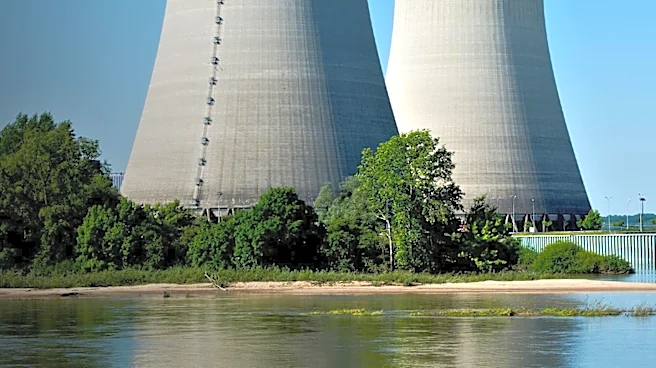
the development and performance of international agreements. Their current research areas include arms control without great powers, weapons governance of emerging technologies, and attitudes in nonnuclear weapon states regarding deterrence and disarmament. For the 2025-2026 period, the lab has outlined specific research initiatives. One key area of focus for this period is the study of public perceptions of spent fuel management within the United States. This research aims to understand how the U.S. public views and responds to issues surrounding the management of nuclear waste.
Why It's Important?
This research into U.S. public perceptions of spent fuel management is important for several reasons. Effective management of spent nuclear fuel is a critical national security and environmental concern. Public perception can significantly influence policy decisions, funding for storage and disposal facilities, and the overall success of long-term nuclear waste strategies. Negative public sentiment or lack of understanding can lead to political opposition, delays in project implementation, and increased costs. Conversely, a well-informed and supportive public can facilitate the development and deployment of safer and more efficient management solutions. Understanding these perceptions allows policymakers and stakeholders to address concerns, build trust, and develop communication strategies that resonate with the public, ultimately contributing to more stable and sustainable energy policies and national security frameworks.
What's Next?
The Weapons Governance Lab's research on U.S. public perceptions of spent fuel management is scheduled to take place during the 2025-2026 period. Following the completion of this research, the lab will likely analyze and disseminate its findings. These insights could be shared with policymakers, community stakeholders, and the broader public to inform discussions and decisions related to nuclear waste management. The findings may influence future public engagement strategies by government agencies responsible for nuclear energy and waste, potentially leading to adjustments in how information is communicated and how public concerns are addressed. This research could also serve as a foundation for further studies into the social and political dimensions of nuclear technology in the United States.
Beyond the Headlines
The study of public perceptions of spent fuel management extends beyond immediate policy implications, touching upon deeper societal and ethical considerations. The long-term storage of nuclear waste presents intergenerational equity challenges, as current decisions will impact future generations. Public perception often reflects underlying anxieties about safety, environmental contamination, and the trustworthiness of institutions managing such hazardous materials. This research can shed light on the cultural and psychological factors that shape public acceptance or rejection of nuclear technologies. Understanding these deeper implications is crucial for fostering informed public discourse and developing solutions that are not only technically sound but also socially acceptable and ethically responsible, contributing to a more sustainable and secure future for nuclear energy in the U.S.