






What's Happening?
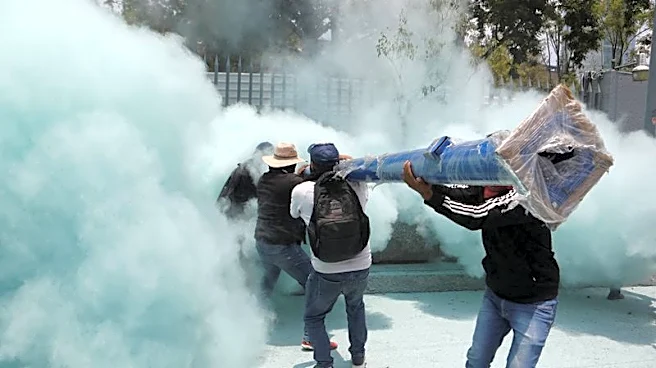
In Mexico City, various social movements, including teachers, families of missing persons, and animal rights groups, are using the upcoming FIFA World Cup celebrations to amplify their demands for government action. The protests, led by the teachers'
union CNTE, have blocked major thoroughfares and disrupted city activities to call for better working conditions. These demonstrations coincide with the influx of international visitors for the World Cup, which Mexico is co-hosting with the United States and Canada. The protesters aim to leverage the global attention on the event to pressure the government of President Claudia Sheinbaum to address their grievances, which include economic disparities and social justice issues.
Why It's Important?
The protests highlight the tension between hosting a major international event and addressing domestic social issues. The World Cup presents an opportunity for Mexico to showcase itself on the global stage, but it also brings to light the underlying social and economic challenges faced by many citizens. The government's response to these protests could impact its international image and influence future policy decisions. The situation underscores the broader issue of balancing economic development and tourism with the need to address pressing social concerns, a challenge faced by many countries hosting large-scale events.
What's Next?
As the World Cup approaches, the Mexican government will need to navigate the dual pressures of managing international expectations and addressing domestic unrest. The outcome of these protests could influence future government policies and the handling of social movements. Additionally, the international community will be watching closely to see how Mexico balances these competing demands, which could affect its reputation and relationships with other countries. The protests may also inspire similar actions in other host cities, potentially leading to a broader movement for social change.