




What's Happening?
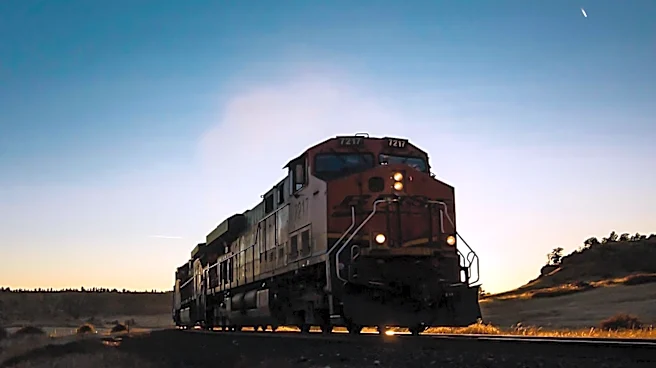
An Amtrak train collided with a semi-truck in Douglas County, Georgia, resulting in road closures but no reported injuries. The incident occurred in the area of Veterans Memorial Highway and Municipal Parkway. NewsChopper2 footage showed the Amtrak train involved
in the crash. This marks the third collision between a truck and a train in the metro Atlanta area within approximately the last week. According to a tow truck driver at the scene, neither the semi-truck driver nor any of the 90 passengers on the Amtrak train sustained injuries. The semi-truck was reportedly split in half and was hauling aluminum products. The train itself sustained minimal damage and was able to depart the scene. As of 11:30 a.m., Veterans Memorial Highway had reopened, but the railroad crossing at Municipal Parkway remained closed as authorities continued their work. The Douglas County Sheriff’s Office advised drivers to exercise caution in the area.
Why It's Important?
This incident highlights persistent safety concerns at railroad crossings within the metro Atlanta area, especially given that it is the third such collision in a short period. While no injuries were reported in this specific event, the potential for severe consequences in train-truck collisions is significant, including fatalities, extensive property damage, and major disruptions to transportation networks. Such occurrences can lead to increased scrutiny of railroad crossing infrastructure, signaling systems, and driver awareness campaigns. For Amtrak, these incidents can raise questions about operational safety and potential delays for passengers. For the trucking industry, it underscores the importance of driver vigilance and adherence to safety protocols at crossings. The repeated nature of these accidents may prompt local and state authorities, along with railroad companies, to re-evaluate existing safety measures and consider implementing new preventative strategies to enhance public safety and prevent future incidents.
What's Next?
Authorities, including Amtrak and local law enforcement, are expected to continue investigating the cause of the collision in Douglas County. This investigation will likely examine factors such as the condition of the railroad crossing, the functionality of warning signals, and the actions of the truck driver. Depending on the findings, there could be recommendations for improved safety measures, such as enhanced signage, updated crossing technology, or increased enforcement of traffic laws at railroad crossings. The ongoing closure of the Municipal Parkway railroad crossing indicates that repairs or further assessments are needed before it can be safely reopened. The frequency of recent train-truck collisions in the metro Atlanta area may also lead to broader discussions among transportation officials about regional railroad safety initiatives and public awareness campaigns aimed at both drivers and pedestrians. Updates from officials regarding the investigation and road status are anticipated.
Beyond the Headlines
The recurring nature of train-truck collisions in metro Atlanta points to a systemic issue that extends beyond individual incidents. This pattern could indicate a need for a comprehensive review of railroad crossing safety across the region, potentially involving multiple stakeholders including state transportation departments, local municipalities, railroad operators, and federal safety agencies. Such a review might explore the efficacy of current warning systems, the design of crossings, and the volume of both rail and road traffic. There could also be a focus on public education campaigns to raise awareness among drivers about the dangers of disregarding crossing signals or misjudging train speeds. Economically, frequent disruptions due to such accidents can impact local commerce and supply chains, particularly if major routes are affected. The broader implication is a call for proactive, multi-faceted solutions to enhance safety and prevent future occurrences, rather than simply reacting to each individual crash.