





What's Happening?
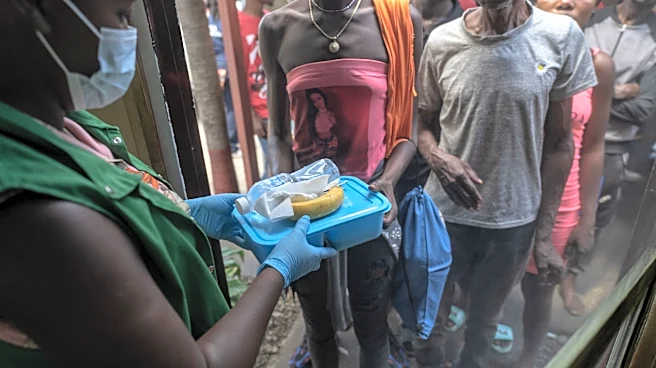
The World Food Programme (WFP) is urgently seeking $520 million to provide life-saving food and nutrition assistance to 5.4 million people in Sudan through April 2027. WFP Executive Director Luke Lindberg highlighted that funding cuts have exacerbated
the hunger crisis in the conflict-ridden nation, leaving approximately 900,000 vulnerable individuals without food assistance. Lindberg, following his first field mission to Sudan, described the situation as one of the world's largest humanitarian emergencies, with widespread displacement and famine since fighting erupted in 2023. The conflict has severely hampered food security and humanitarian access due to insecurity, blocked roads, and flood damage. While WFP previously reached over four million people in August, funding shortfalls have reduced its operational capacity to just over three million. Lindberg emphasized the dire choices faced by those experiencing acute hunger: 'rebel, migrate or starve,' and called for an end to the fighting and increased international support.
Why It's Important?
The escalating hunger crisis in Sudan, as highlighted by the WFP's urgent appeal, underscores the critical impact of funding shortfalls on humanitarian efforts in conflict zones. For U.S. and international stakeholders, this situation presents a significant challenge to global stability and humanitarian principles. The potential for increased migration, regional instability, and further loss of life due to famine could have broader geopolitical implications. The WFP's struggle to maintain assistance levels despite the severe need demonstrates the fragility of aid operations when international support wanes. This crisis also serves as a stark reminder of the interconnectedness of peace, food security, and humanitarian aid, where conflict directly drives hunger, and sustained assistance is crucial for survival and long-term stability. The appeal for funds is not just about immediate relief but also about preventing a deeper, more entrenched humanitarian catastrophe.
What's Next?
The immediate next step is for international donors, including the U.S., to respond to the WFP's appeal for $520 million to sustain aid operations in Sudan until April 2027. Without this funding, the WFP will be unable to scale up assistance to the 5.4 million people in need, potentially leading to a further deterioration of the humanitarian situation. The WFP has stated its readiness to expand assistance if adequate funding becomes available. Beyond financial contributions, there is an ongoing call for an end to the fighting in Sudan to improve humanitarian access and address the root causes of the hunger crisis. Coordination discussions among NGOs and development partners will also be crucial to align programming with evolving access constraints and ensure safe, sustained aid delivery. The situation will likely continue to draw attention to the need for preparedness and contingency planning in complex humanitarian settings.
Beyond the Headlines
The Sudan crisis reveals deeper implications regarding the international community's responsibility and the effectiveness of humanitarian interventions in protracted conflicts. The WFP's warning about the choices facing acutely hungry people—'rebel, migrate or starve'—highlights the profound ethical dilemma and the potential for such desperation to fuel further instability and radicalization. The scaling down of international humanitarian operations due to funding cuts also places increased pressure on affected communities and local responders, raising questions about the sustainability and localization of aid efforts. This situation tests the global commitment to humanitarian principles and the ability of international systems to protect vulnerable populations when political will and financial resources are insufficient. The long-term effects on health, resilience, and economic stability in Sudan will be severe, impacting generations and potentially creating a cycle of dependency and conflict.