
What's Happening?
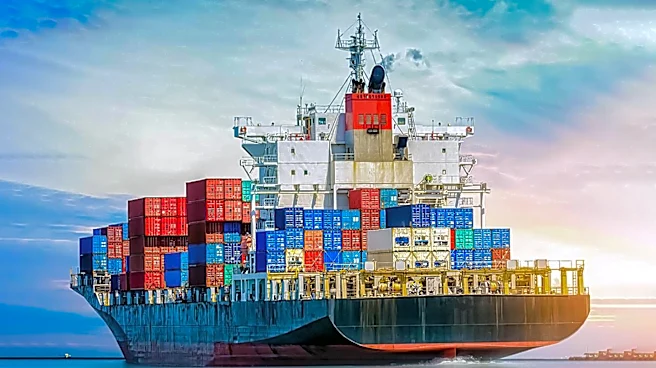
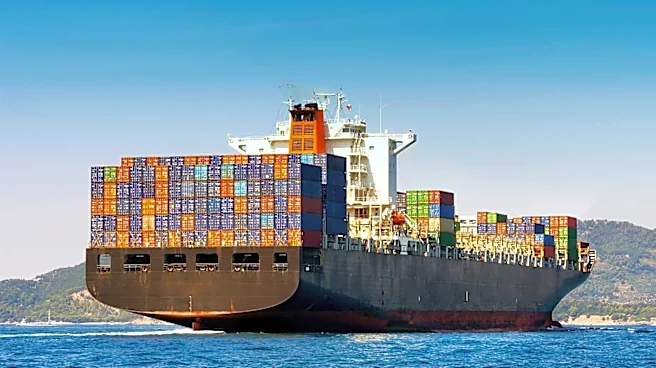
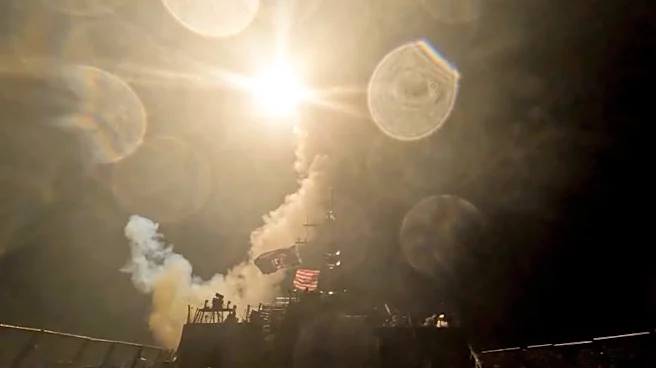
Commercial shipping through the Strait of Hormuz has significantly decreased following recent U.S. military strikes on Iran. The strait, a critical oil chokepoint, has seen a reduction in traffic as insurance
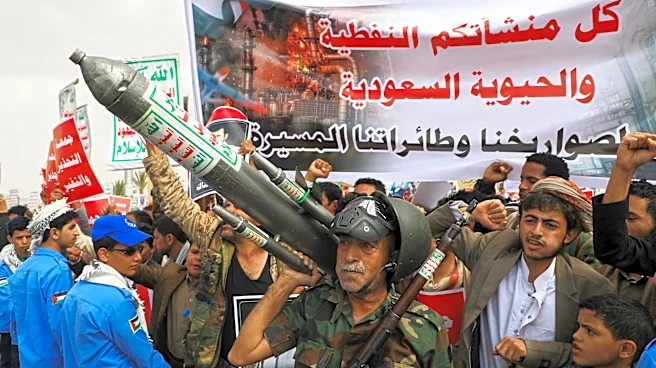
costs rise and security risks increase. Iran has declared the waterway closed, threatening ships that transit without its permission, while the U.S. maintains that the strait remains open except for ships heading to or from Iranian ports. Some vessels have been disappearing from public tracking systems, suggesting they are sailing closer to Iran's side to avoid detection. This situation raises questions about Iran's potential financial gains from ships seeking safe passage, despite U.S. sanctions.
Why It's Important?
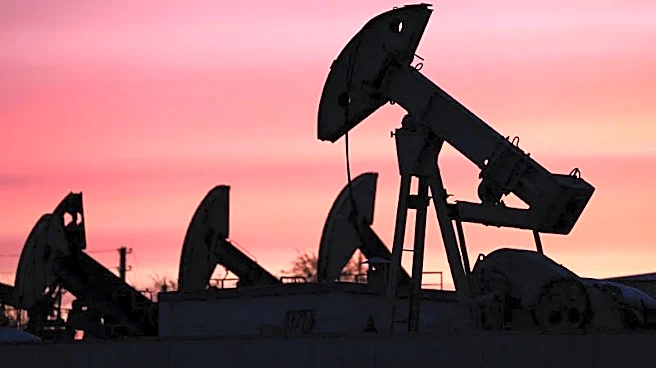
The Strait of Hormuz is a vital maritime corridor for global oil transportation, and any disruption can have significant implications for international trade and energy markets. Iran's actions in the strait could set a dangerous precedent for international waterways, potentially allowing a nation-state to control access and impose tolls. This could impact global shipping routes and increase costs for the shipping industry. The U.S. views freedom of navigation as a national security interest, and any challenge to this principle could have broader geopolitical consequences.
What's Next?
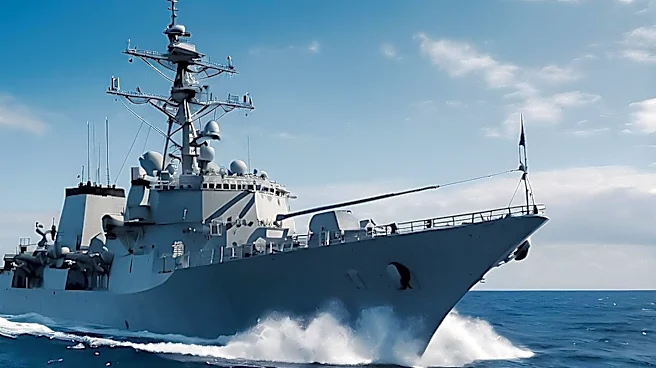
The U.S. and its allies may need to consider diplomatic or military responses to ensure the strait remains open to international traffic. The situation could lead to increased tensions between Iran and Western nations, potentially affecting global oil prices and supply chains. Monitoring of shipping activity in the region is likely to continue, with potential adjustments to naval deployments by the U.S. and its allies to safeguard maritime routes.