









What's Happening?
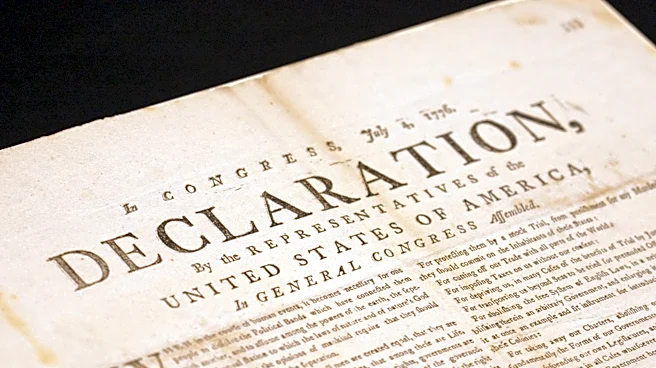
A rare copy of the Declaration of Independence, printed in Exeter, New Hampshire, shortly after its adoption on July 4, 1776, has been discovered in the UK. This document, intended to spread news of American independence, was found in Britain's National
Archives by a volunteer cataloging records from the American Revolutionary War. The copy was among papers seized by the Royal Navy in December 1776 from the American privateer vessel Dalton. The Dalton, commanded by Eleazer Johnson, was captured by the HMS Raisonnable off the coast of Portugal, and its crew was imprisoned in England. The discovery is significant as it is the only known example of this printing outside the United States, with only 11 copies known to survive.
Why It's Important?
The discovery of this rare Declaration of Independence copy underscores the historical connections between the United States and the United Kingdom, particularly during the Revolutionary War. It highlights the role of privateers in the war, who were authorized by the Continental Congress to disrupt British trade and military supply lines. The presence of the Declaration on the Dalton signifies the ideological motivations behind these actions, emphasizing the fight for independence. This find also illustrates the importance of physical archives in uncovering historical artifacts that can reshape our understanding of past events, offering new insights into the transatlantic dynamics of the 18th century.
What's Next?
The discovery may prompt further examination of British archives for additional documents related to the American Revolutionary War. Historians and researchers might explore other seized papers for more insights into the period. The find could also lead to increased interest in the role of privateers and their contributions to the American independence movement. Additionally, this discovery may encourage similar archival projects aimed at uncovering hidden historical documents, potentially leading to more revelations about the era.
Beyond the Headlines
This discovery raises questions about the preservation and recognition of historical documents. It highlights how items of significant historical value can remain unnoticed for centuries, emphasizing the need for meticulous archival work. The find also reflects on the changing perceptions of historical documents over time, as the Declaration's significance was not immediately recognized by the British at the time of its capture. This underscores the evolving understanding of historical events and the importance of context in interpreting historical artifacts.