



What's Happening?
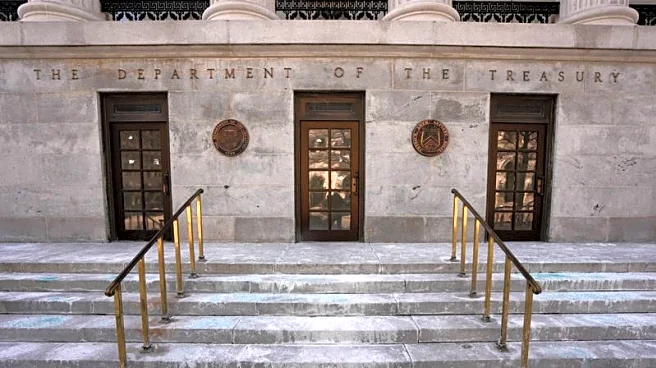
The U.S. Treasury Department is set to take over the management of defaulted federal student loans, a move that marks the beginning of a significant restructuring of the federal student loan system. This transition involves approximately $180 billion
in loans, representing 11% of the total $1.7 trillion student loan portfolio. The change is part of a broader initiative by the Trump administration to dismantle the U.S. Education Department, which has traditionally overseen these loans. The agreement outlines that the Treasury will eventually assume full responsibility for all student loans, although the timeline for this transition remains unspecified. Borrowers will continue to interact with their current loan servicers, and no immediate action is required on their part.
Why It's Important?
This development is significant as it represents a major shift in the management of federal student loans, which have been under the purview of the Education Department for over four decades. The move is part of President Trump's broader agenda to reduce the size of the federal government by dismantling the Education Department. The transition to the Treasury Department is intended to bring more financial discipline and efficiency to the management of student loans. However, this shift has raised concerns among student loan advocates who fear it could lead to increased confusion for borrowers. Critics argue that the Education Department is better equipped to handle the complexities of student loans, and any missteps in the transition could have severe consequences for millions of borrowers.
What's Next?
The transition of student loan management to the Treasury Department is expected to face legal challenges, as federal law mandates that the Education Department oversee student loans. The Trump administration plans to frame this as a partnership to circumvent legal hurdles. As the transition progresses, stakeholders will closely monitor the impact on borrowers, particularly those in default. The administration's decision to postpone involuntary collections on defaulted loans earlier this year highlights the political sensitivity of this issue, especially in an election year. The Treasury Department's ability to manage the complex student loan portfolio effectively will be scrutinized, given its previous challenges in collecting defaulted loans.
Beyond the Headlines
The restructuring of student loan management could have long-term implications for federal education policy and the role of government in higher education financing. The move aligns with conservative efforts to reduce federal involvement in education and shift responsibilities to other government agencies or private entities. This transition could set a precedent for further privatization of federal education programs. Additionally, the potential for increased borrower confusion and legal challenges underscores the need for clear communication and oversight during the transition. The outcome of this restructuring could influence future policy decisions regarding federal student aid and the broader education system.