






What's Happening?
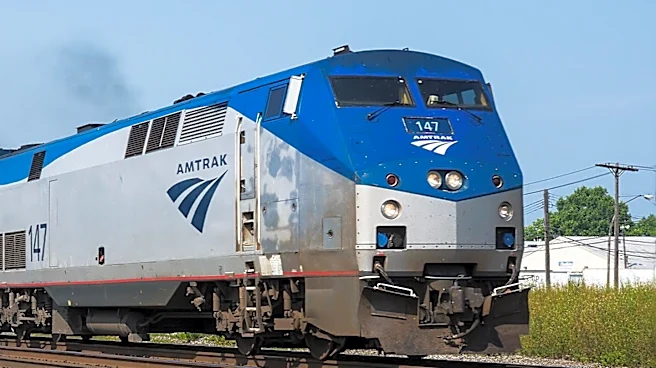
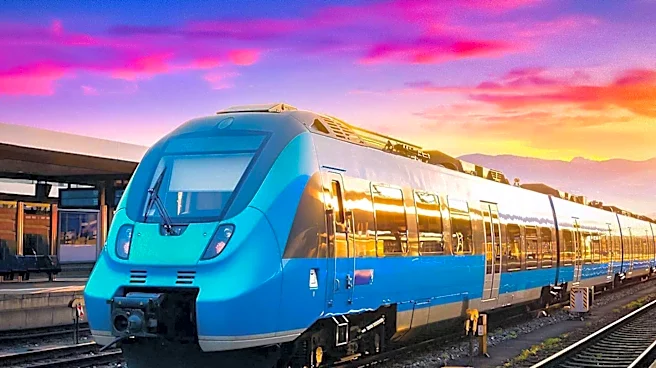
Amtrak is set to introduce 83 new Airo trainsets, beginning this fall with eight trains on the Pacific Northwest's Cascades route. These new trains, part of an $8-billion investment, will eventually serve over a dozen routes, including those in New England,
Pennsylvania, and the Mid-Atlantic region. The Airo trains are designed to reduce trip times, enhance reliability and comfort, and can reach speeds of up to 125 mph. The Cascades trains, for example, will carry 317 passengers, a significant increase from current capacity. A key feature of the Airo trains is their dual propulsion system, allowing them to operate on both electric and diesel power, which will particularly benefit routes like the Northeast Regional by eliminating the need to swap locomotives when transitioning between electrified and non-electrified sections, such as south of Washington, D.C.
Why It's Important?
This significant investment in new trainsets represents a major modernization effort for Amtrak, with some existing trains dating back to the 1970s. The introduction of Airo trains is expected to provide substantial environmental benefits, as they meet the Environmental Protection Agency’s strictest Tier 4 emissions standards for locomotive engines, significantly reducing particulate matter and nitrogen oxide emissions. This upgrade supports a cleaner form of transportation, aligning with broader environmental goals. Improved hardware and increased capacity can also lead to more frequent rail service, potentially drawing more travelers away from cars, thereby reducing traffic congestion and carbon footprints. The investment underscores the federal government's commitment to passenger rail, following a historic $66 billion allocation through the Infrastructure Investment and Jobs Act, despite past proposals for funding cuts.
What's Next?
The rollout of the 83 new Airo trainsets will commence this fall, starting with the Pacific Northwest's Cascades route. Riders on the Northeast Regional route are expected to begin utilizing Airo trains in 2027. The gradual introduction of these trains across more than a dozen routes will continue, progressively replacing older rolling stock and expanding service capabilities. The new trains' ability to quickly transition between diesel and electric power without changing locomotives will streamline operations and reduce travel times on routes that currently require such changes. This modernization is anticipated to contribute to Amtrak's goal of setting new ridership records and enhancing the overall passenger experience, making rail travel a more attractive and efficient option for intercity transportation.
Beyond the Headlines
The deployment of Amtrak's Airo trainsets signifies a broader shift towards sustainable and efficient transportation infrastructure in the U.S. The dual-power capability of these trains addresses the current limitations of the national rail network, much of which remains unelectrified. By improving efficiency and reducing emissions, these trains contribute to national climate goals and offer a tangible alternative to carbon-intensive travel methods. The investment also highlights the economic benefits of domestic manufacturing, as the trains are built in the U.S. by Siemens. This modernization effort is not just about faster or cleaner trains; it's about reimagining the role of passenger rail in a country heavily reliant on road and air travel, potentially fostering a cultural shift towards greater acceptance and utilization of public transit for long-distance journeys.