





What's Happening?
Drivers renting cars in Los Angeles and attempting to use their personal FasTrak transponders are at a high risk of being double-billed for tolls. This issue arises from the overlap between a driver's personal toll account and the rental company's toll program.
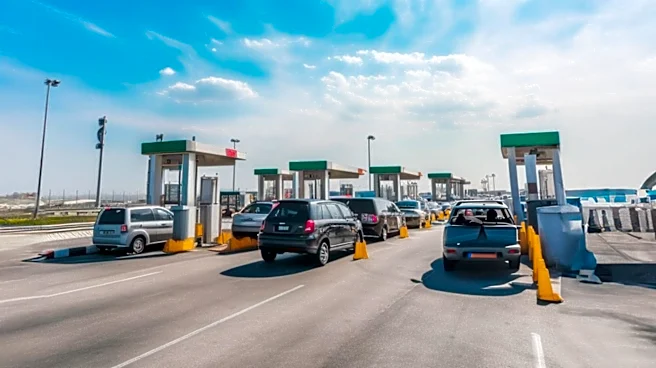
Toll roads are designed to identify a vehicle and process payment only once. However, the rental car ecosystem often creates two potential payment paths: the driver's personal transponder and the rental car's license plate, which may be enrolled in the rental company's toll-by-plate billing service. Many rental companies automatically enroll their vehicles in a toll service that charges the renter for tolls, often with an additional daily access fee. If a personal FasTrak transponder is used simultaneously, both systems might attempt to charge for the same toll event, leading to duplicate charges. This is particularly relevant in Los Angeles, where drivers may encounter tolled lanes like the I-110 or I-10 ExpressLanes, or toll bridges, sometimes unintentionally.
Why It's Important?
This double-billing issue has significant financial implications for U.S. consumers, particularly those traveling to Los Angeles and renting vehicles. Unintended duplicate charges can lead to unexpected expenses and administrative burdens for travelers who must then dispute these fees. The problem highlights a systemic inefficiency in the integration of personal toll transponders with rental car company billing practices. It also underscores a lack of clear communication and standardized procedures within the rental car industry regarding toll management. Consumers stand to lose money through these double charges and the time spent resolving them, while rental car companies may face increased customer service inquiries and potential reputational damage if these issues become widespread. The situation also points to a need for greater transparency and clearer options for renters at the counter to avoid such complications.
What's Next?
To mitigate the risk of double billing, rental car users in Los Angeles are advised to take proactive steps at the rental counter. This includes explicitly asking if the rental vehicle is pre-enrolled in a toll program and whether opting out is possible. Renters should also confirm if the car has a built-in transponder or sticker and if it can be deactivated. If a personal FasTrak tag is to be used, the rental car's license plate should be added to the personal FasTrak account for the rental period and removed promptly afterward. It is crucial to choose only one payment method for tolls to avoid system overlap. If double billing still occurs, drivers should compare timestamps of transactions and contact the rental toll provider first for refunds, providing proof of the FasTrak transaction and the rental agreement. These steps aim to prevent or resolve billing discrepancies, but the onus remains largely on the consumer.
Beyond the Headlines
The recurring issue of double billing for tolls in rental cars points to a broader challenge in the digital integration of transportation services. While technology aims to streamline processes, the lack of seamless interoperability between personal toll accounts and rental company systems creates friction and financial penalties for consumers. This situation raises questions about consumer protection in an increasingly automated environment, where billing systems can operate independently without immediate cross-verification. It also highlights the need for industry-wide standards or regulatory oversight to ensure that rental car companies provide clear, unambiguous options for toll payment and that their systems are designed to prevent duplicate charges. The ethical implication is that consumers are often left to navigate complex billing discrepancies, which can be particularly challenging for out-of-state or international visitors unfamiliar with local tolling nuances.